
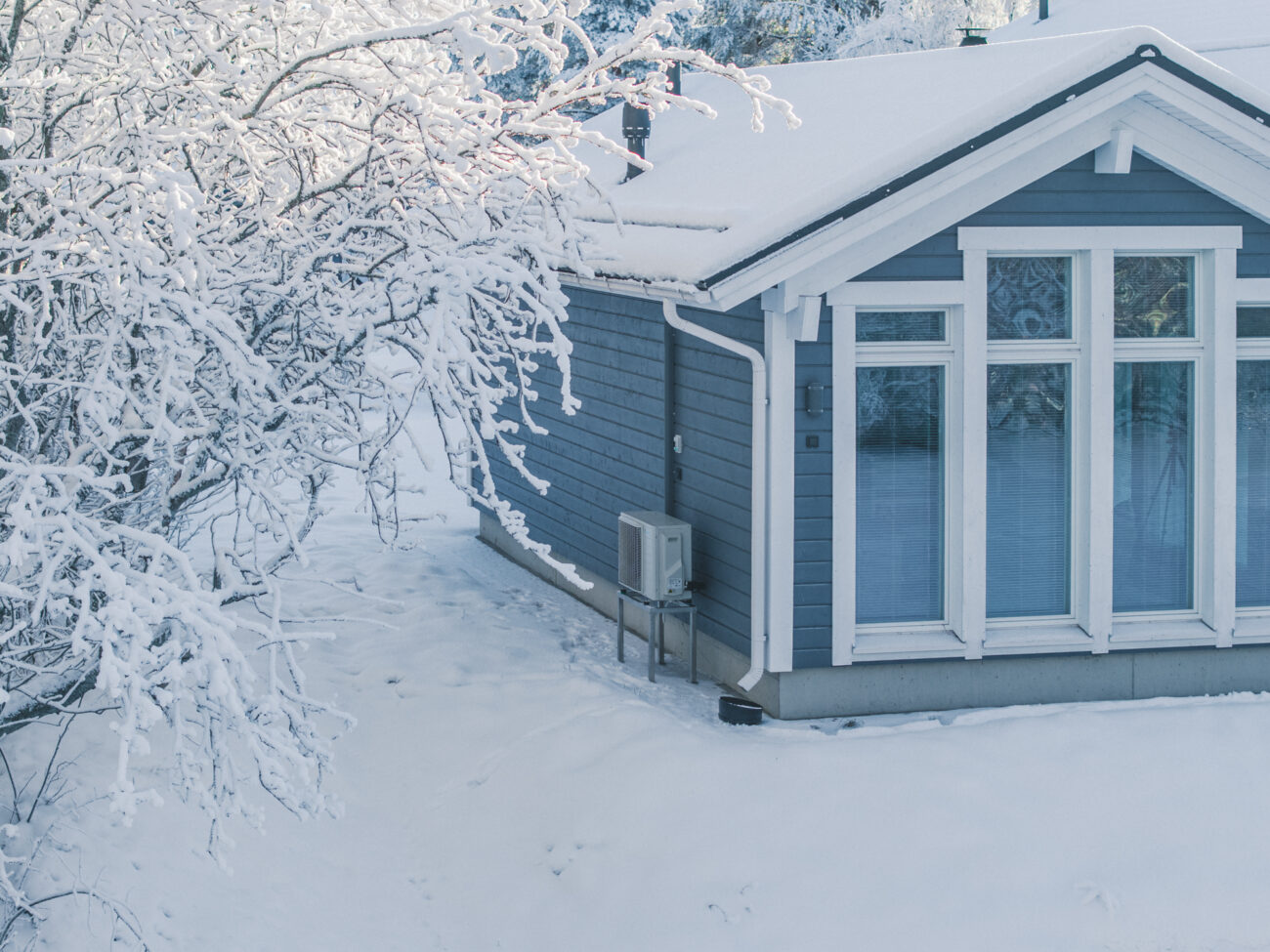
Using an air-to-air heat pump in winter is different from other seasons. It plays an important role in how your home stays warm and how much energy your heating system uses.
When used correctly, a heat pump helps maintain a comfortable indoor temperature while reducing heating costs. Many homeowners, however, wonder whether it should stay on during freezing temperatures and what settings work best in winter.
The good news is that modern air-to-air heat pumps are designed for year-round use and can continue to deliver efficient heating throughout much of the winter season.
This guide explains how to use your heat pump efficiently and comfortably throughout the winter.

Common mistake: turning off the heat pump in freezing weather
One of the most common mistakes in winter is switching the heat pump off during deep frost. Saving energy may seem logical, but it often works against you.
When the heat pump is off, the rest of the heating system has to work harder. Heat spreads less evenly and indoor temperature swings increase. Constant stopping and starting also wears the unit unnecessarily.
A simple rule of thumb is to keep the heat pump on throughout the heating season. Steady use gives the best results.

How does an air-to-air heat pump work in freezing weather?
An air-to-air heat pump collects and transfers heat energy from outside to inside. Even when the air is below freezing, there’s still usable heat the unit can extract.
Efficiency drops in very cold weather, but it doesn’t collapse. A quality unit designed for northern conditions still produces heat more efficiently than direct electric heating, even on cold days.
An air-to-air heat pump should not be thought as a full replacement for your current heating system – it’s a support for the system.
Freida’s air-to-air heat pumps are tested for northern conditions and built on 20 years of experience and 130,000 installations.

Using an air-to-air heat pump optimally in winter – steady operation is most effective
The pump works best when left running through the season. It then keeps temperature with low, steady power instead of facing irregular heavy loads.
If the pump is switched off and on repeatedly, it must heat quickly to keep indoor air steady. That raises energy consumption and strains the unit. This is especially true in the middle of winter. It’s like driving – steady speed uses less fuel than constant accelerating and braking.
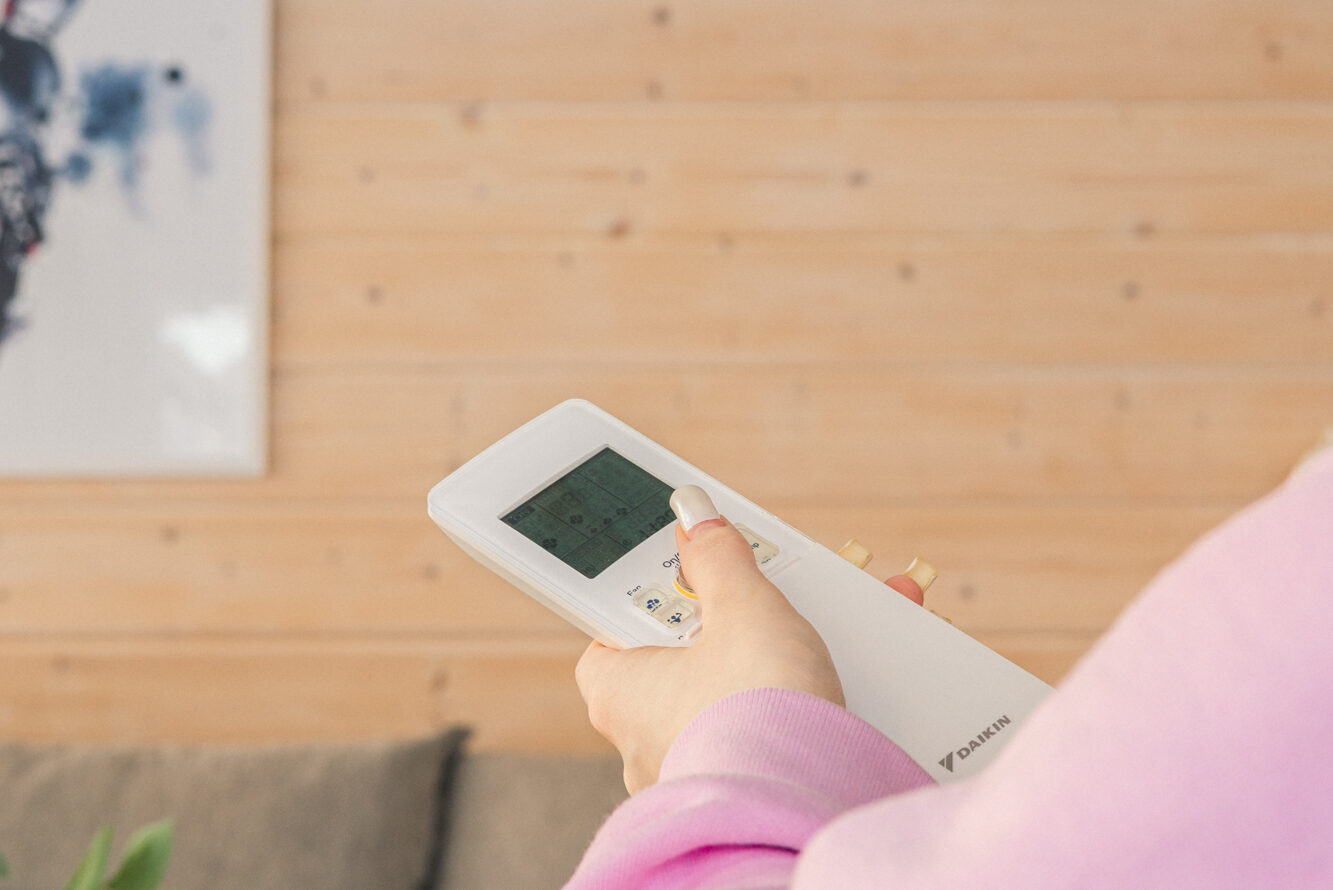
The right settings make a surprising difference
Often the pump is in use but not set up optimally. The settings are usually the reason.
In winter it’s important the unit is clearly in heating mode. Set the temperature a little higher than other heating so the pump contributes as much heat as possible. Pointing the airflow down helps warm air spread evenly through the room.
Too low fan power can let warm air pool near the unit.
Read our article about air-to-air heat pump electricity usage.
Starting up in deep freeze
If the air-to-air heat pump has been unused for a long time, avoid starting it right in the middle of extreme cold. Sudden temperature change stresses the unit more than steady use.
In practice it’s safer to wait for the weather to ease before restarting.
Ice build-up on the outdoor unit
During cold periods, ice often forms on the outdoor unit – and that is completely normal.
Ice only needs to be removed if it starts to block airflow or affect the performance of the unit.
For this reason, it is a good idea to check the outdoor unit regularly during winter. If necessary, ice can be carefully melted with warm water and removed by hand.
Avoid using tools or intense heat that could damage the unit, and always switch off the air-to-air heat pump before carrying out any work.
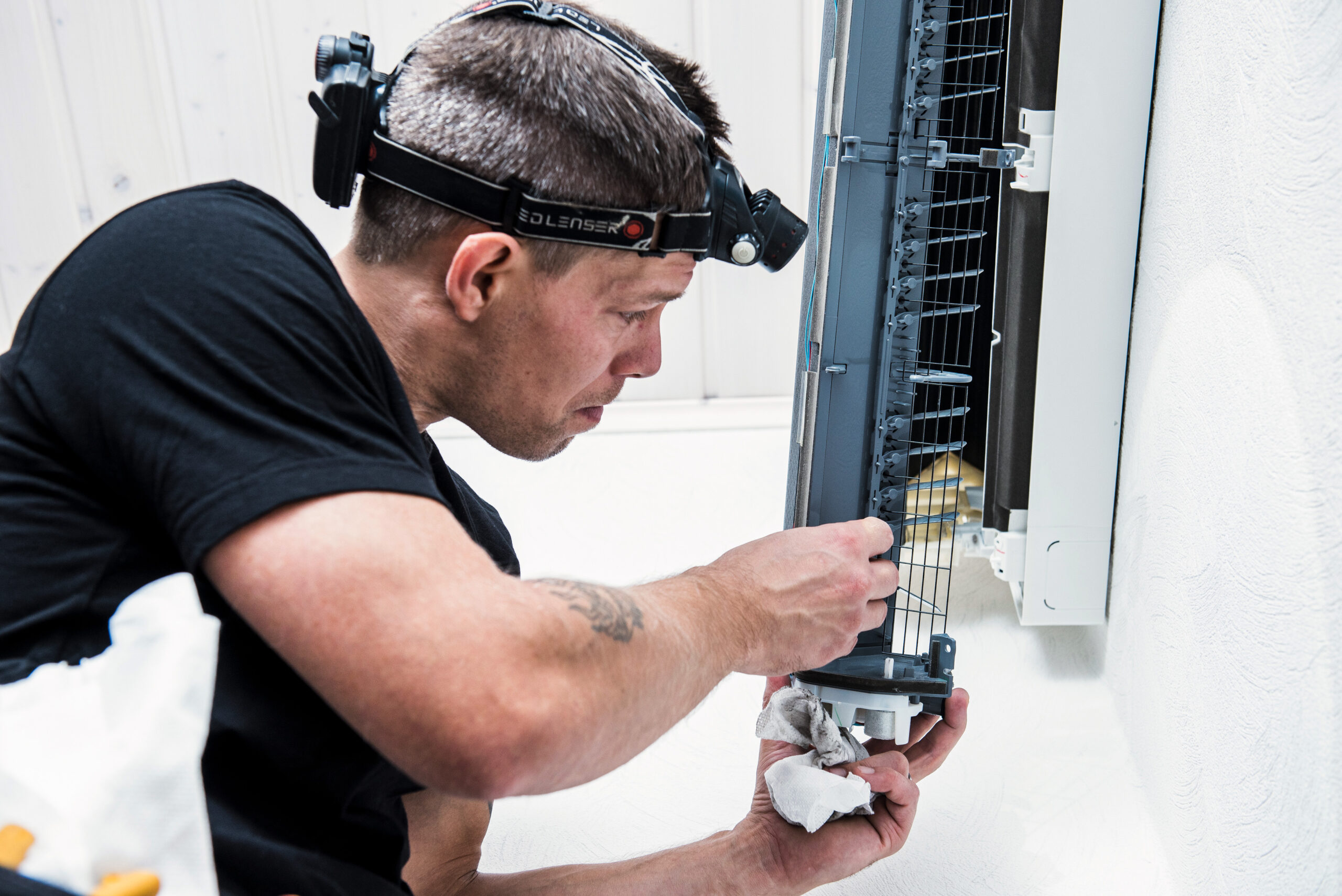
When should you service your air-to-air heat pump?
A healthy air-to-air heat pump stays quiet and needs very little attention.
If you notice reduced performance, unusual behaviour, or it has been several years since the last service, professional maintenance may be due.
Preventive maintenance isn’t just a safer choice – it’s how you keep the unit energy-efficient and help it last longer.
Freida Care
Whether your heat pump needs scheduled maintenance, fault repair or warranty service, Freida handles it with care, expertise and attention to detail.

Fireplace and air-to-air heat pump working together
If you have a fireplace, an air-to-air heat pump helps spread the warmth more evenly. As the air moves, heat doesn’t stay in one room but flows gently through the whole home.
This usually results in a more even temperature throughout the home – without any additional cost.
Low-level heating for the garage
Not every space needs to be kept fully warm all the time. Low-level heating is a simple solution for a summer cottage, garage, or storage room where a lower baseline temperature is enough.
An air-to-air heat pump also prevents moisture and structural freezing without unnecessary energy use.
Read our article about air-to-air heat pumps in a garage.
Summary
Using an air-to-air heat pump during winter is not complicated. When the unit is installed correctly and allowed to run continuously, it helps keep your home warm while keeping energy consumption under control throughout the heating season.
In most cases, the best results come when the air-to-air heat pump is simply allowed to do its job in the background. However, it is important to check regularly during winter that excessive ice does not build up beneath the outdoor unit.
Frequently asked questions about using an air-to-air heat pump in winter
Yes – it’s best to let it run steadily. Continuous use eases the load on other heating and keeps indoor temperature more stable.
Yes. Modern air-to-air units are built for Nordic conditions and can still deliver heat at low temperatures.
Performance does fall as it gets colder, but it still performs better than direct electric heating.
If the unit has been off for a long time, it’s not recommended to start it during the coldest hours.
If possible, wait for slightly milder weather — starting then puts less strain on the unit.
Ice comes from melted frost that refreezes in the cold. This is normal. It only becomes an issue if the ice blocks the unit or sticks to its parts.
If a lot of ice builds up, you can gently melt the layer with warm water. Always switch the unit off before you do this.
Melt the ice with warm water and carefully remove any icicles by hand.
Avoid using tools so delicate parts, especially the coil, aren’t damaged. Remember to turn the unit off before defrosting.
There isn’t a fixed cutoff. Modern units include control systems that protect them even in extreme conditions.
High-quality models designed for Nordic climates can continue operating in outdoor temperatures as low as –35°C to –40°C, depending on the model.