Air-to-air heat pumps can both heat your home in winter and cool it in summer. But how does the technology actually work – and how can a heat pump extract heat even when it’s freezing outside?
In this guide, we’ll explain the process step by step with clear illustrations, because sometimes it’s simply easier – and more enjoyable – to understand something by seeing it.
How does air-to-air heat pump work when heating
How does air-to-air heat pump work when cooling
How does an air-to-air heat pump heat your home?
1. Heat exists even in cold outdoor air
1. Heat exists even in cold outdoor air
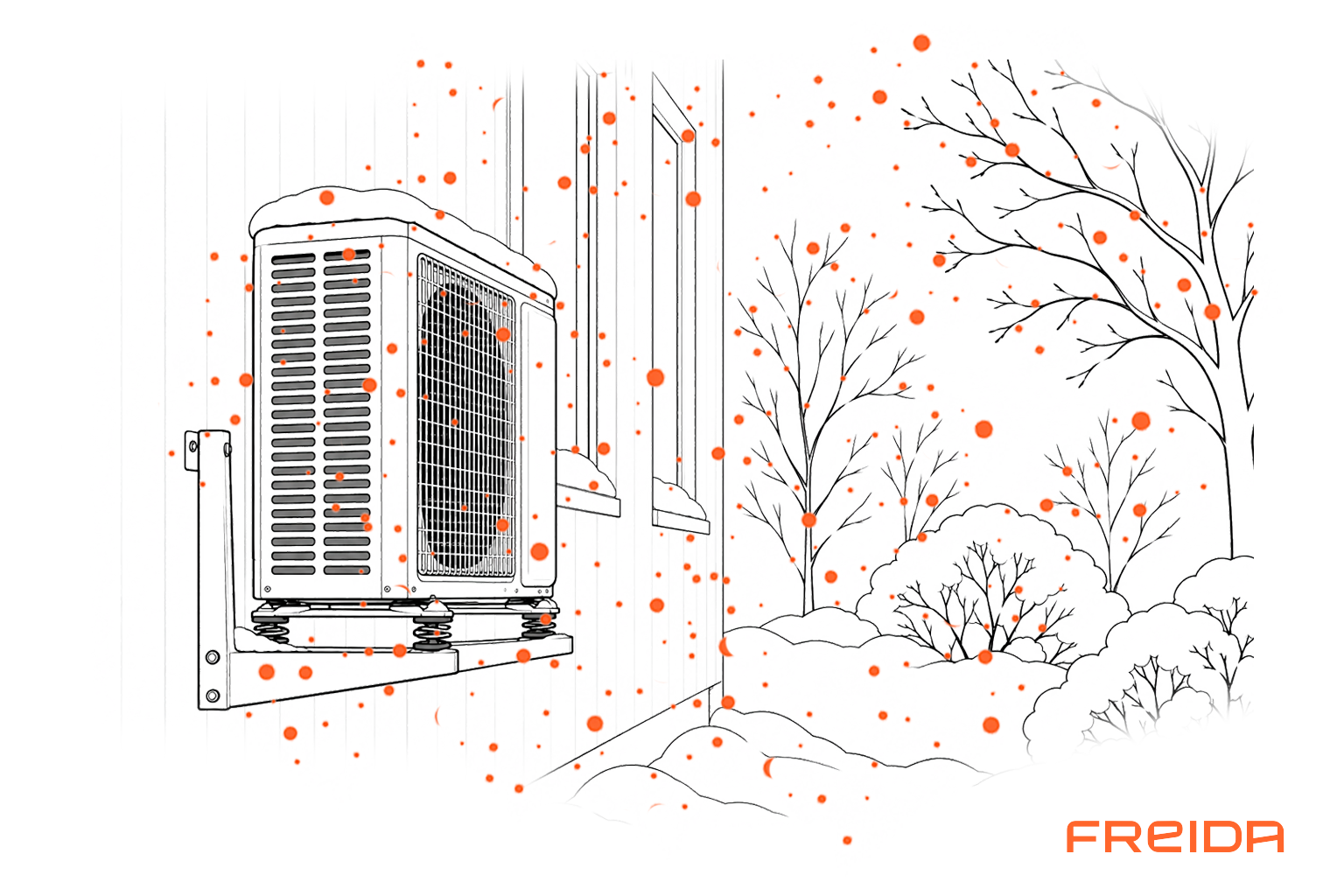
Even on a freezing winter day, outdoor air still contains thermal energy. So while −20°C certainly feels cold to us, it doesn’t mean there is no heat there for a heat pump to use.
For perspective, you would have to go all the way down to absolute zero – around −273°C – to reach the theoretical point where thermal motion is at its minimum. That puts a Nordic winter into a rather different perspective.
2. The outdoor unit draws heat from the air
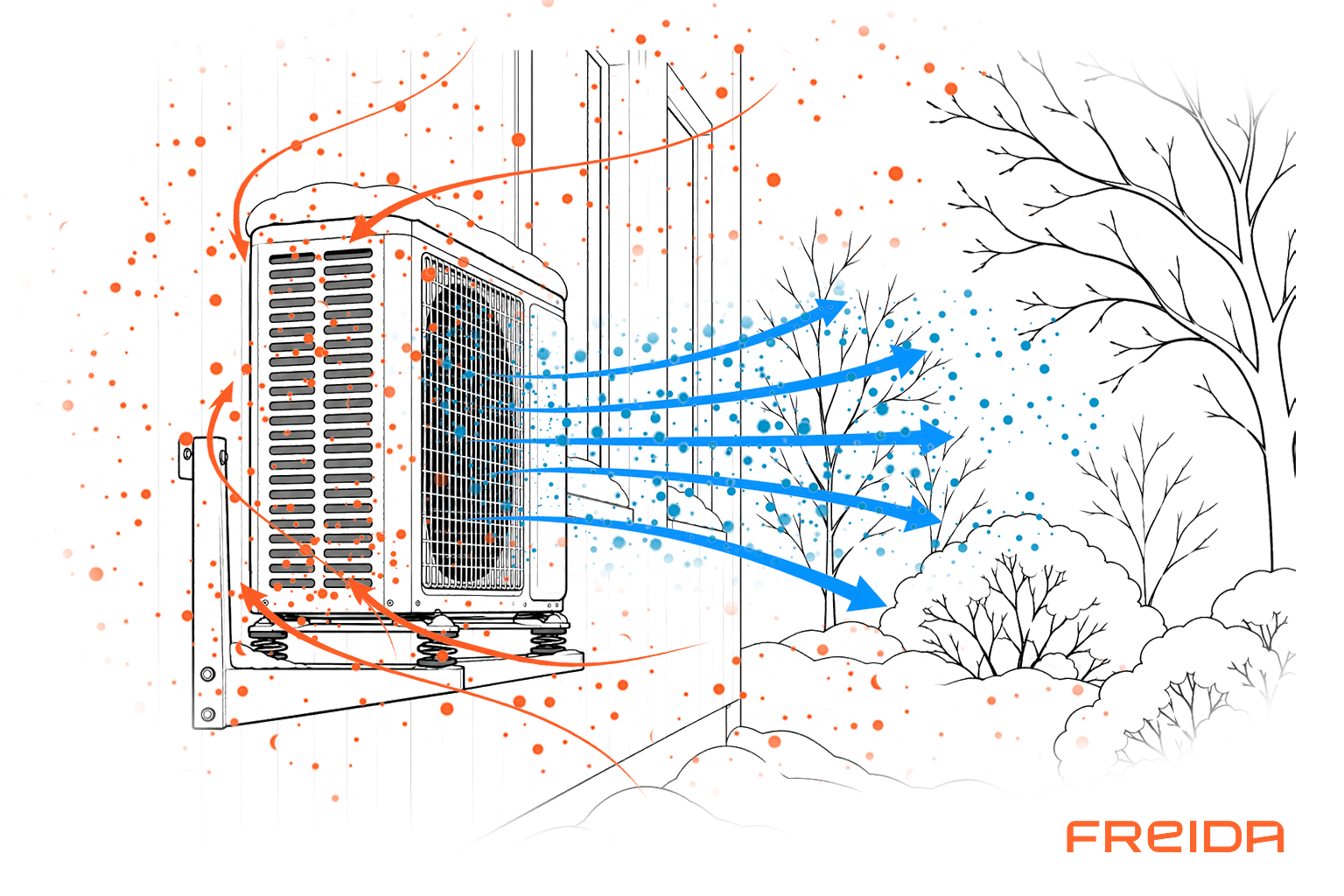
2. The outdoor unit draws heat from the air
The fan draws in large amounts of outdoor air and moves it through the heat exchanger. As the air passes through the unit, it leaves slightly colder than it was when it entered.
Why so much air? There isn’t a huge amount of usable heat in any single pocket of cold winter air. By continuously moving fresh outdoor air through the heat exchanger, the heat pump can collect thermal energy from a much larger volume of air.
3. Heat moves into the outdoor heat exchanger
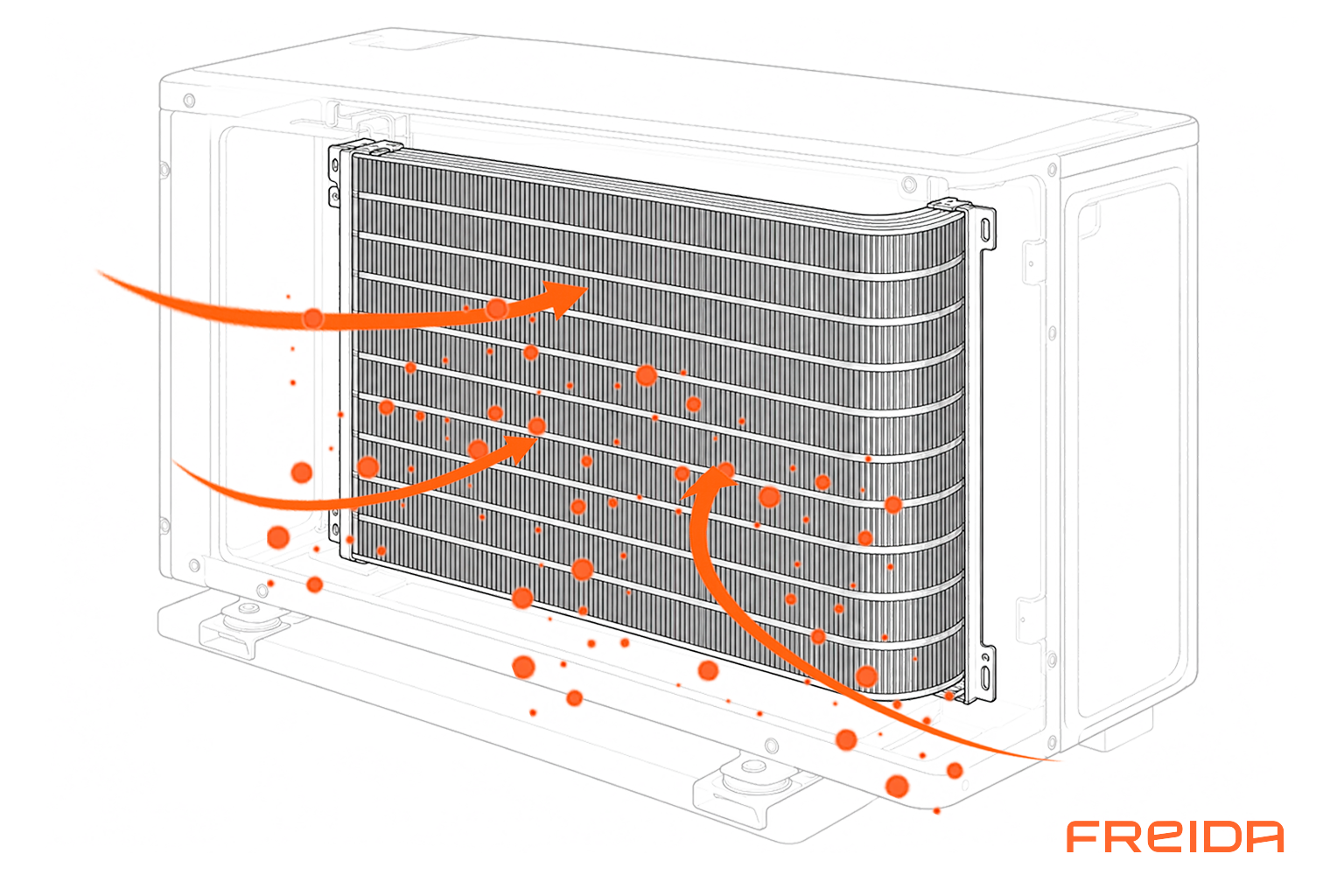
3. Heat moves into the outdoor heat exchanger
The outdoor air passes through the heat exchanger, where its thermal energy is transferred to the cold refrigerant circulating inside the tubes. Thin metal fins help collect heat from a large volume of air and transfer it efficiently to the refrigerant tubes.
The air leaving the outdoor unit is therefore colder than the air that entered it. The heat hasn’t disappeared – it has been transferred into the refrigerant.
4. The refrigerant absorbs the heat
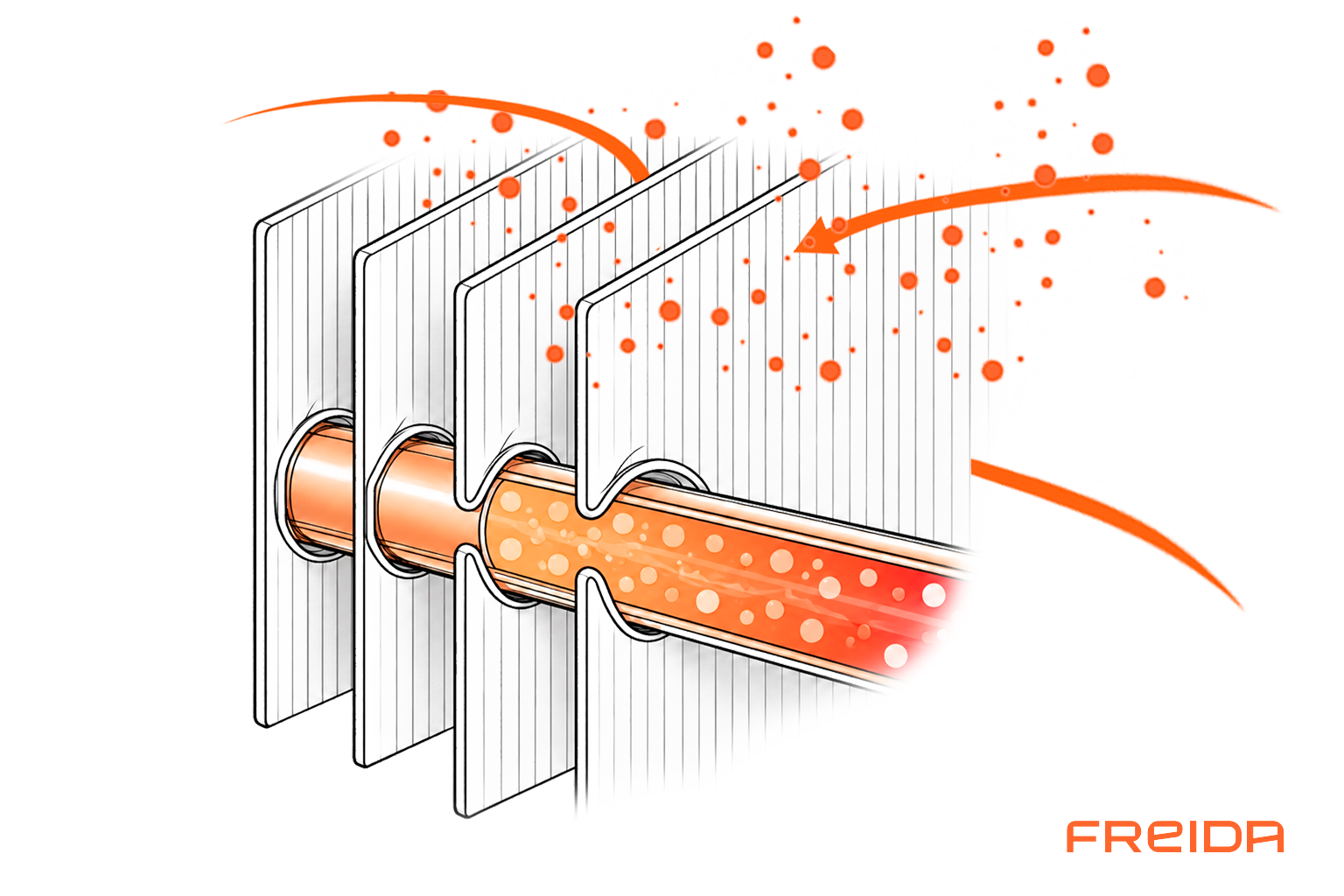
4. The refrigerant absorbs the heat
Inside the heat exchanger, refrigerant flows through a network of small tubes. As it absorbs heat through the walls of these tubes, its temperature rises and the refrigerant evaporates, changing from a liquid into a gas.
Interesting fact: The refrigerant doesn’t need to become “hot” at this stage. Because it operates at a very low pressure and boiling point, even cold winter air can provide enough heat to make it evaporate.
5. The compressor raises the temperature
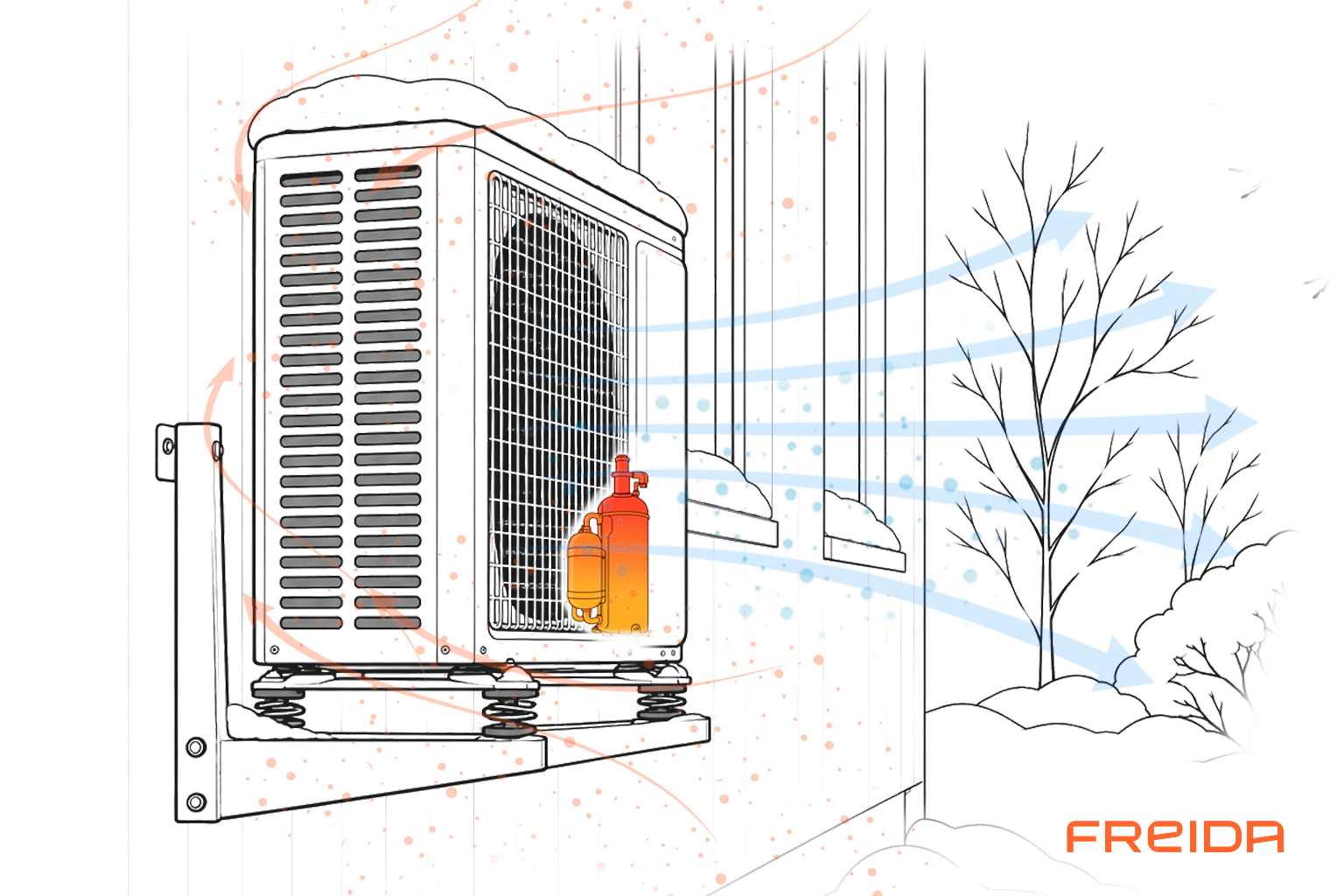
5. The compressor raises the temperature
The compressor is often described as the heart of the heat pump. The refrigerant enters it as a gas and is compressed, increasing both its pressure and temperature. What enters relatively cool leaves as a hot, high-pressure gas.
The compressor is also where most of the electricity used by the heat pump goes. Rather than using electricity simply to create heat, the heat pump uses it to power the process that moves heat collected from the outdoor air into your home.
6. The hot refrigerant travels indoors
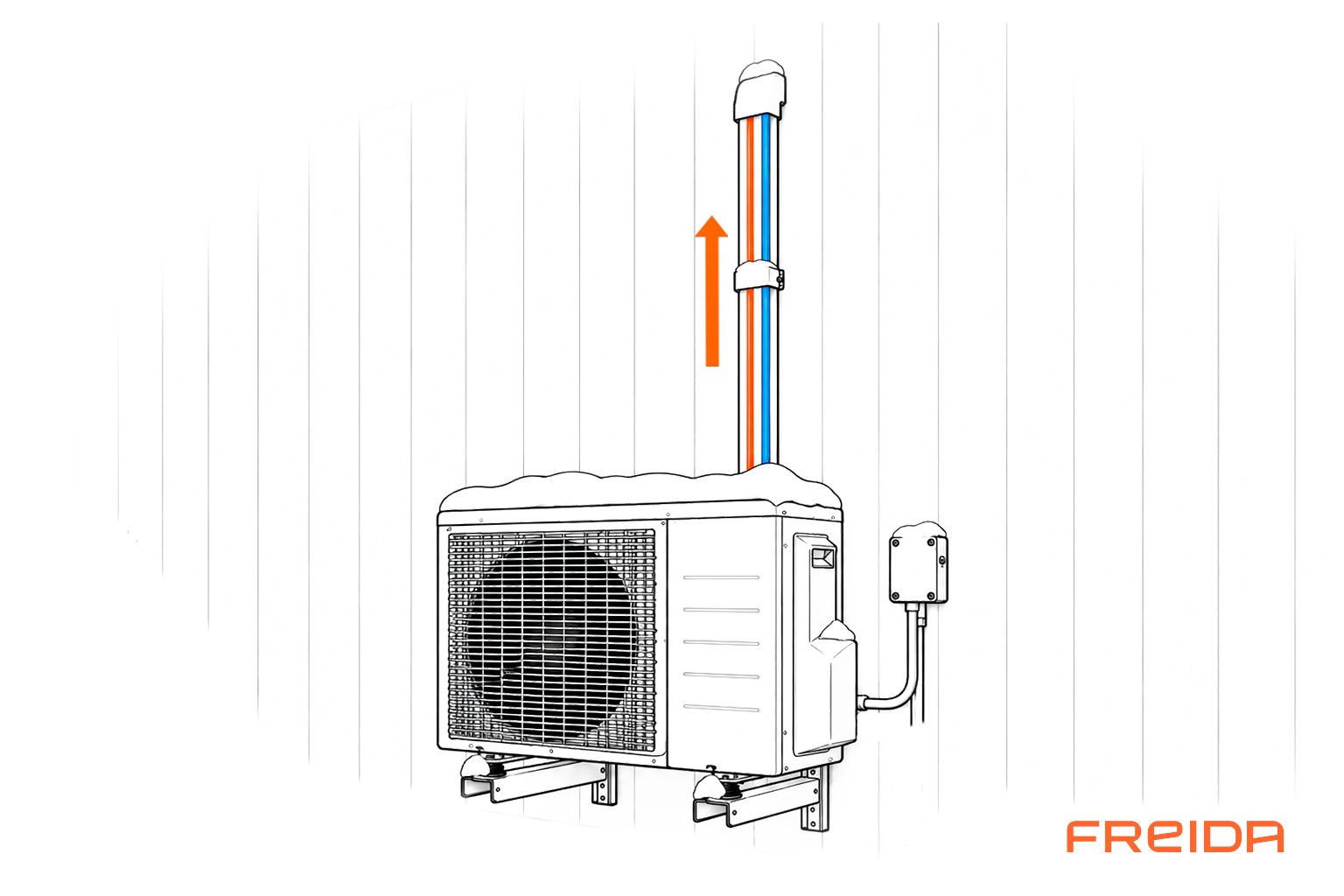
6. The hot refrigerant travels indoors
The hot, high-pressure refrigerant gas now flows from the outdoor unit through the wall and into the indoor unit via an insulated copper pipe. A second pipe carries the refrigerant back outside later in the cycle.
One important detail: the outdoor unit does not blow outdoor air into your home. The indoor and outdoor units are connected by a closed refrigerant circuit. It is the refrigerant that carries the heat indoors – not the outdoor air.
7. The heat is released into your home
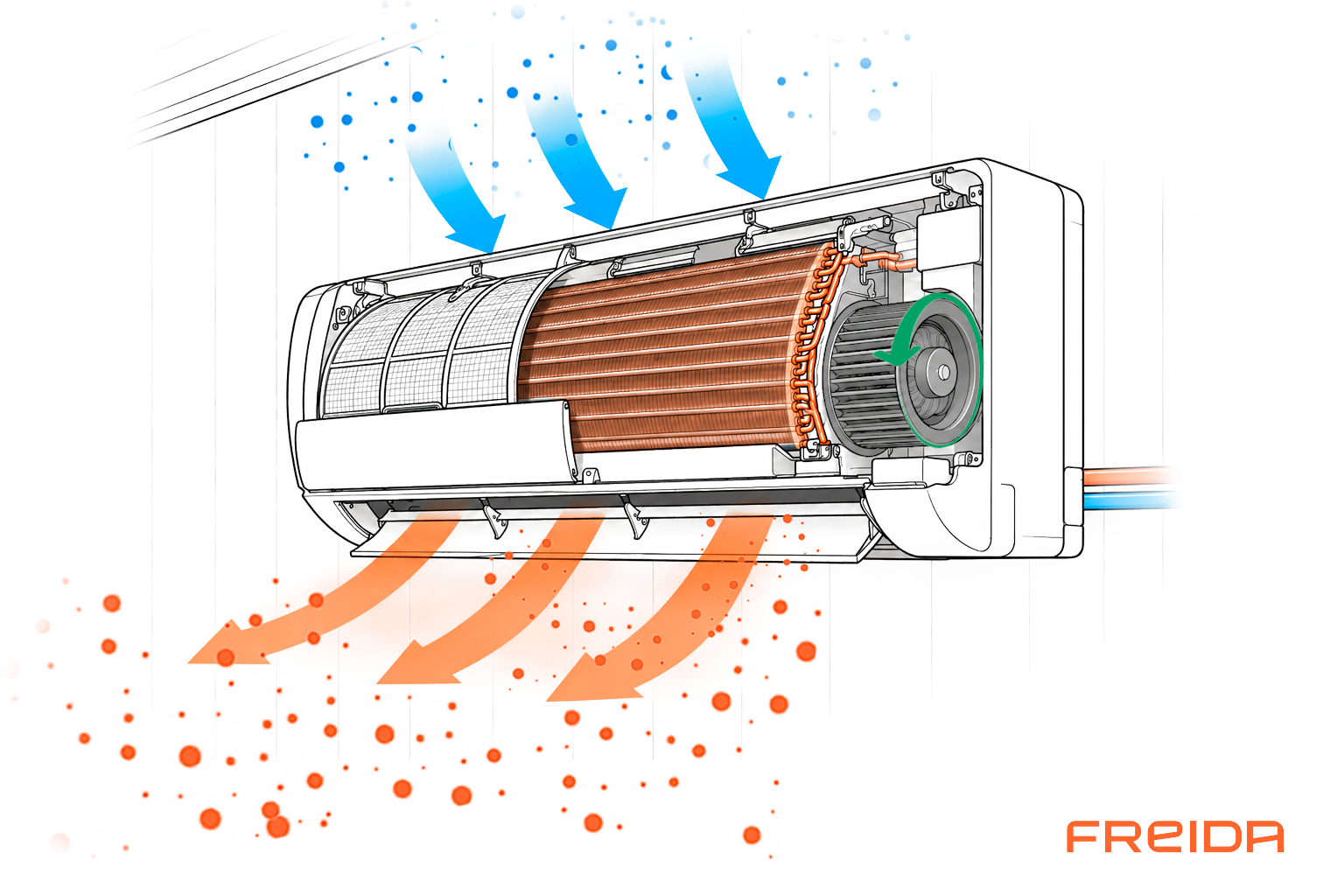
7. The heat is released into your home
Inside the indoor unit, the hot refrigerant flows through another heat exchanger. Room air is drawn in from above, passes through the warm heat exchanger and is then blown back into the room as warm air.
As the refrigerant releases its heat, it cools down and condenses from a gas back into a liquid. The refrigerant and the room air never mix – the heat is transferred between them through the metal heat exchanger.
8. The refrigerant is ready to start again
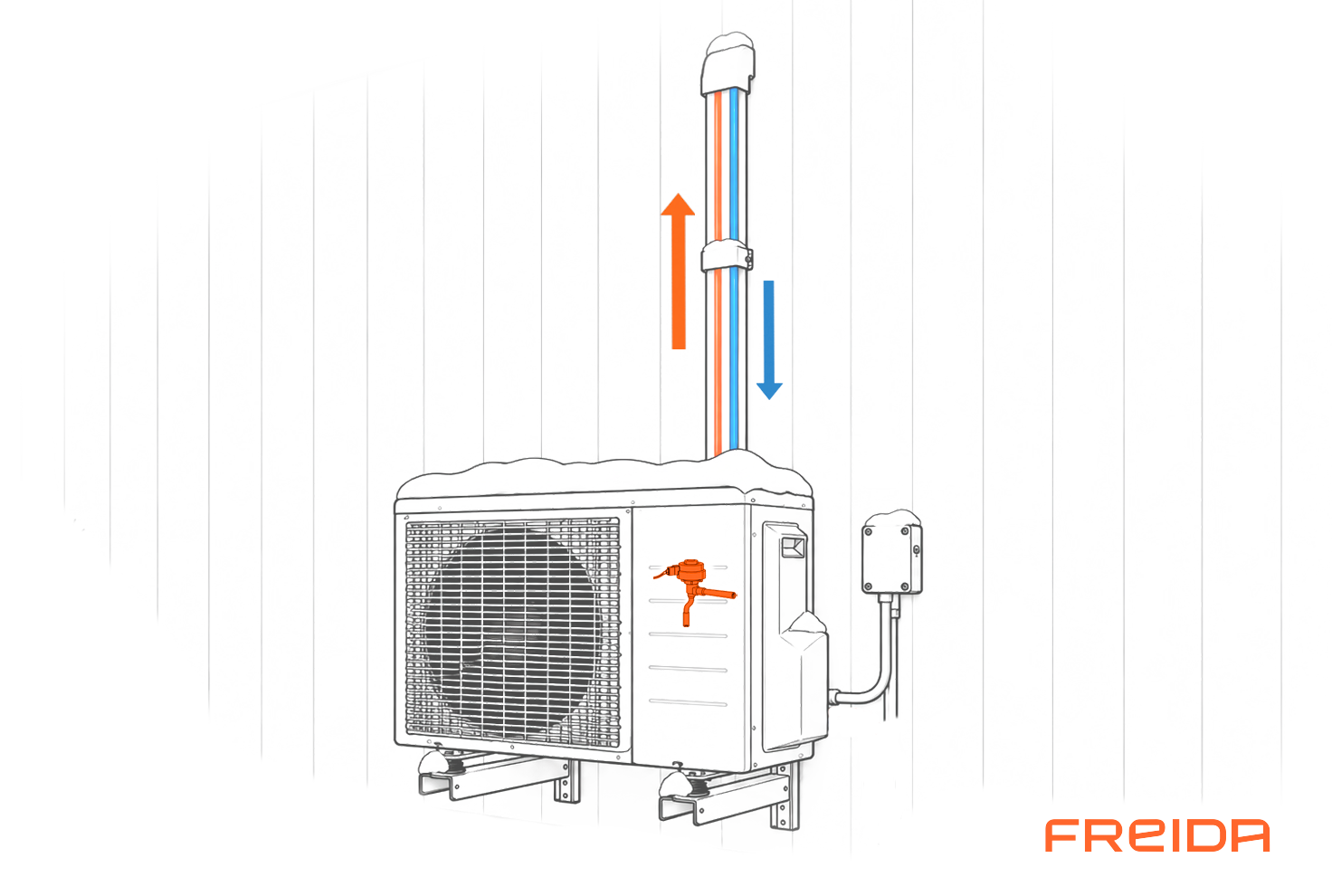
8. The refrigerant is ready to start again
Before returning to the outdoor heat exchanger, the refrigerant passes through the expansion valve. This small but important component suddenly reduces the pressure of the refrigerant, which also lowers its temperature. Now cold and at a low pressure again, the refrigerant is ready to absorb heat from the outdoor air.
The refrigerant then returns to the outdoor heat exchanger, and the same cycle starts all over again – in a continuous loop.
And this is what makes a heat pump so efficient: by using electricity to move heat rather than produce all of it directly, it can deliver several times more heat energy than the electrical energy it consumes. Pretty clever, isn’t it?
8. The refrigerant is ready to start again
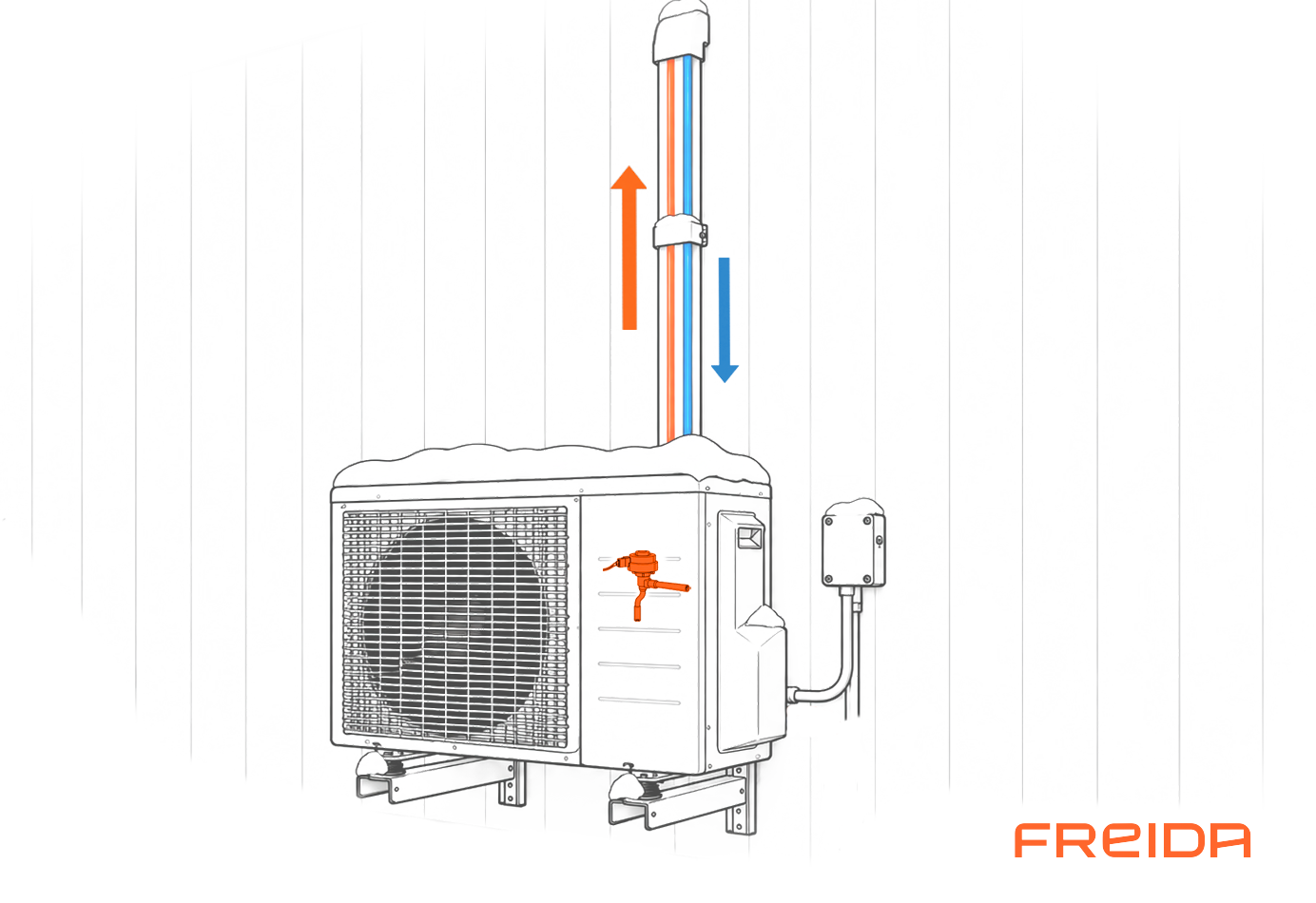
8. The refrigerant is ready to start again
Before returning to the outdoor heat exchanger, the refrigerant passes through the expansion valve. This small but important component suddenly reduces the pressure of the refrigerant, which also lowers its temperature. Now cold and at a low pressure again, the refrigerant is ready to absorb heat from the outdoor air.
The refrigerant then returns to the outdoor heat exchanger, and the same cycle starts all over again – in a continuous loop.
And this is what makes a heat pump so efficient: by using electricity to move heat rather than produce all of it directly, it can deliver several times more heat energy than the electrical energy it consumes. Pretty clever, isn’t it?
How does an air-to-air heat pump cool your home?
When cooling your home, the same basic process works in reverse. Instead of collecting heat outdoors and bringing it inside, the heat pump collects heat from your indoor air and releases it outside.
And that reveals something important: a heat pump doesn’t really create cold. It removes heat.
1. The indoor unit draws in warm room air
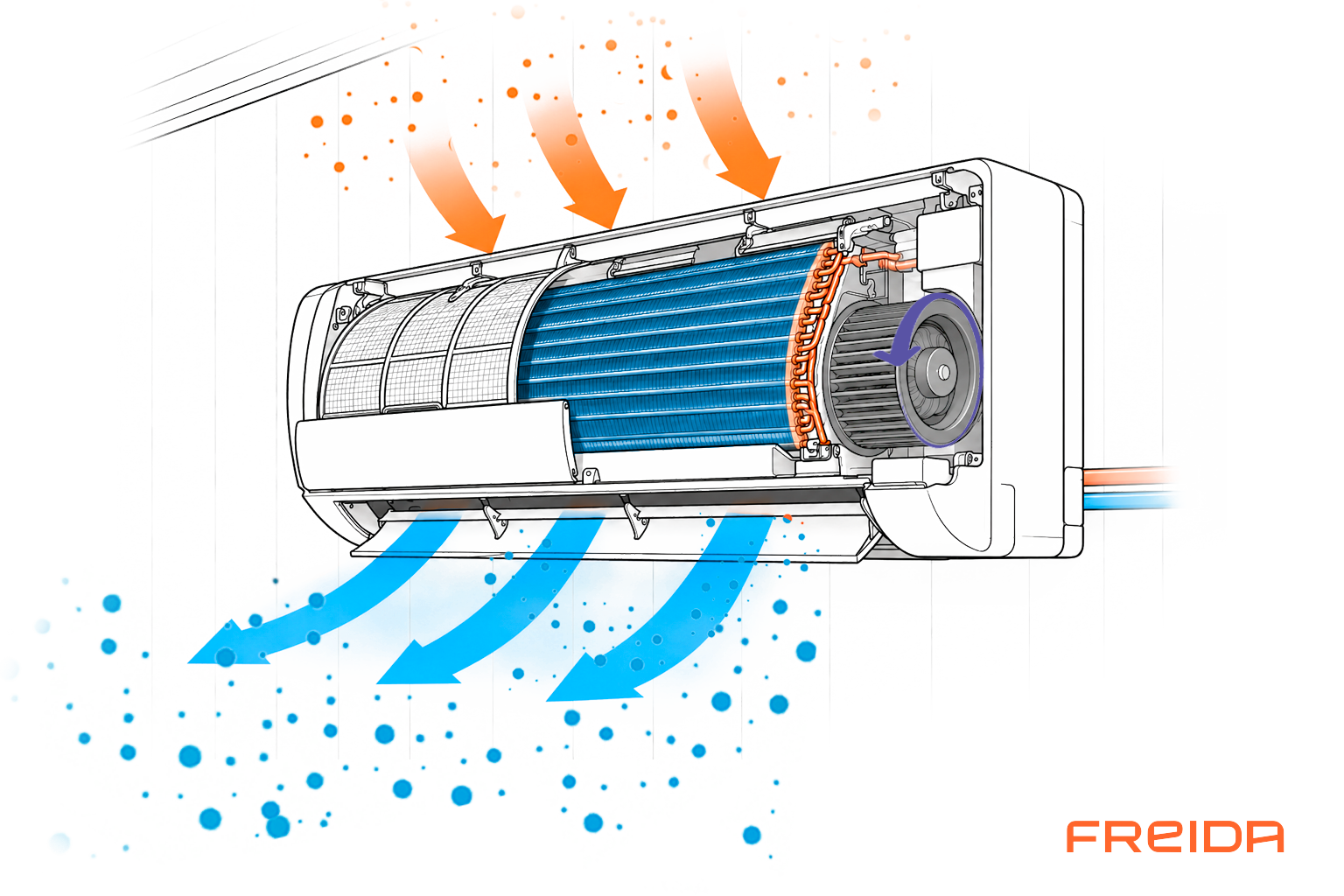
1. The indoor unit draws in warm room air
The indoor unit draws warm room air in through the top. The air passes through the heat exchanger before being blown back into the room at a lower temperature.
So the cool air you feel isn’t air brought in from outside. The heat pump is continuously taking the air already inside your home, removing some of its heat and circulating it back into the room.
2. The refrigerant absorbs the heat
2. The refrigerant absorbs the heat
Inside the heat exchanger, cold refrigerant flows through small tubes surrounded by thin metal fins. Heat from the room air passes through the fins and tubes and into the refrigerant.
As it absorbs heat, the refrigerant evaporates from a liquid into a gas. This is essentially the same process we saw outdoors when heating – only now it happens inside your home.
3. The refrigerant carries the heat outside
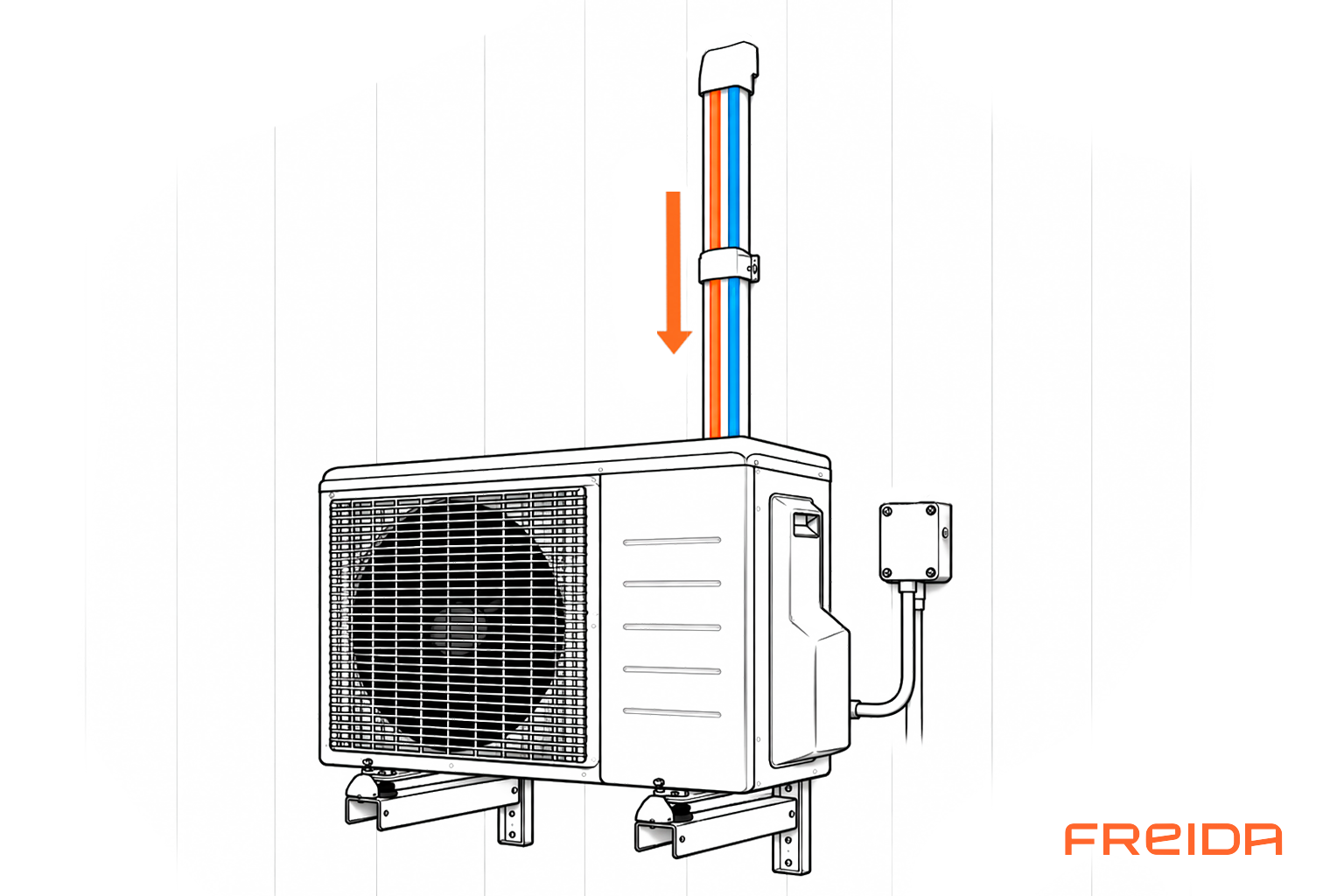
3. The refrigerant carries the heat outside
The refrigerant, now carrying heat collected from your home, travels through the wall towards the outdoor unit.
Think of the refrigerant as the heat pump’s heat carrier. The indoor and outdoor air never need to meet: the refrigerant simply picks up heat on one side of the wall and carries it to the other.
4. The compressor raises the temperature
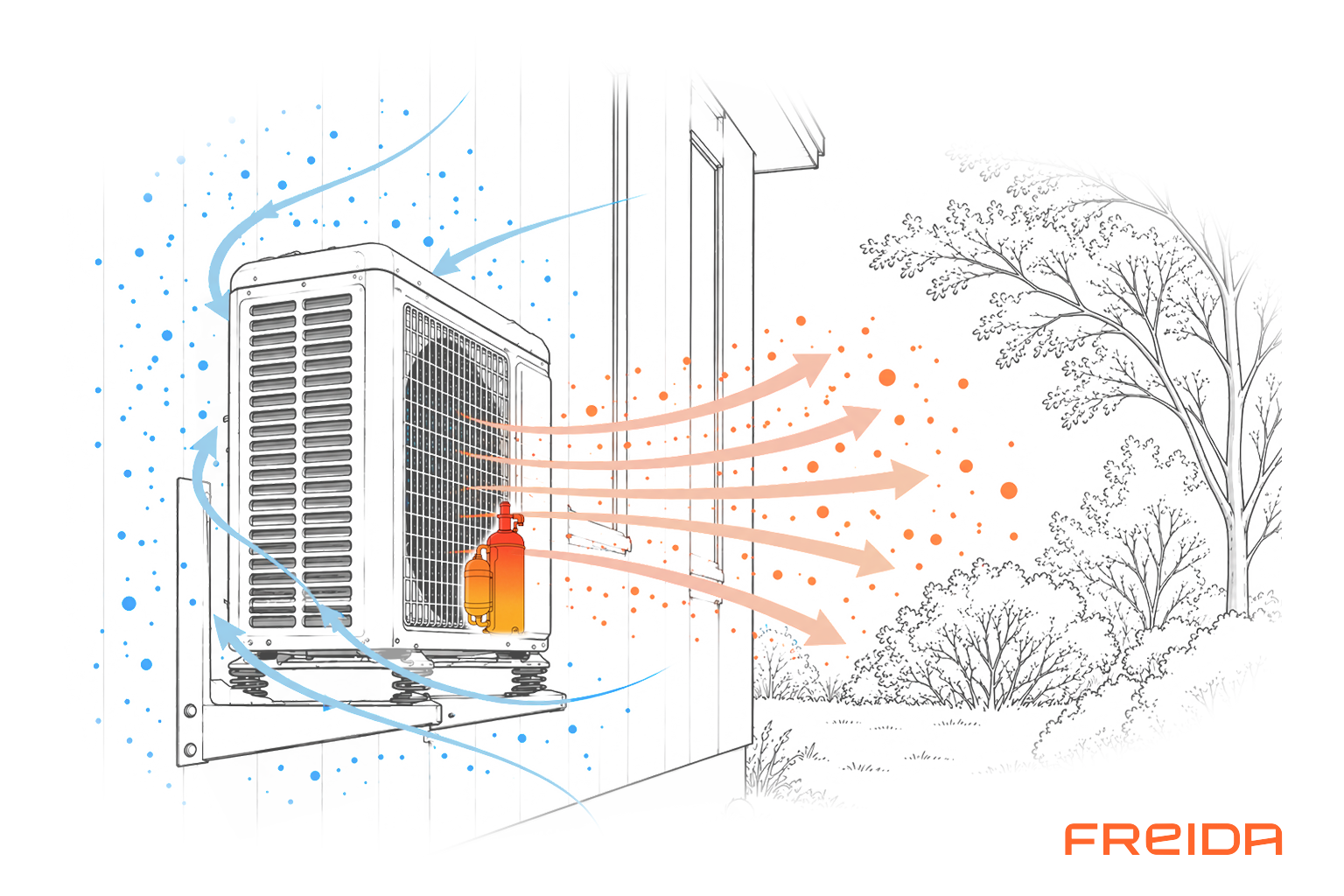
4. The compressor raises the temperature
The refrigerant reaches the compressor as a gas. The compressor – often described as the heart of the heat pump – compresses it, increasing both its pressure and temperature.
Making the refrigerant hotter when we are trying to cool the house might sound backwards. But there is a good reason: to release heat outdoors, the refrigerant needs to be hotter than the surrounding outdoor air.
5. The heat moves into the outdoor air
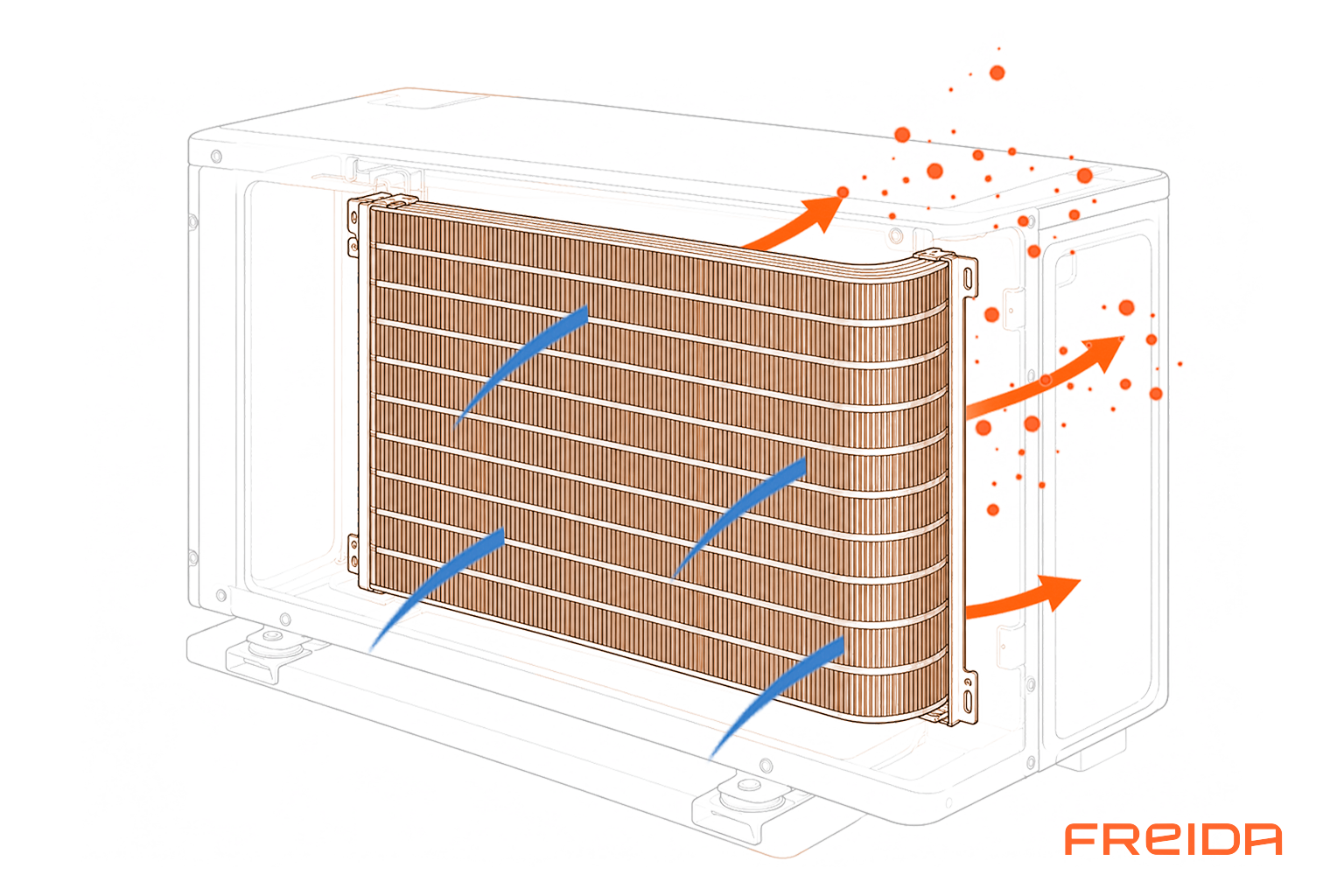
5. The heat moves into the outdoor air
The hot refrigerant now flows through the outdoor heat exchanger. Heat passes from the refrigerant through the tubes and metal fins into the surrounding outdoor air.
As it gives up its heat, the refrigerant cools and condenses back towards a liquid. The heat that was inside your home only moments ago is now outside.
6. The outdoor unit blows the heat away
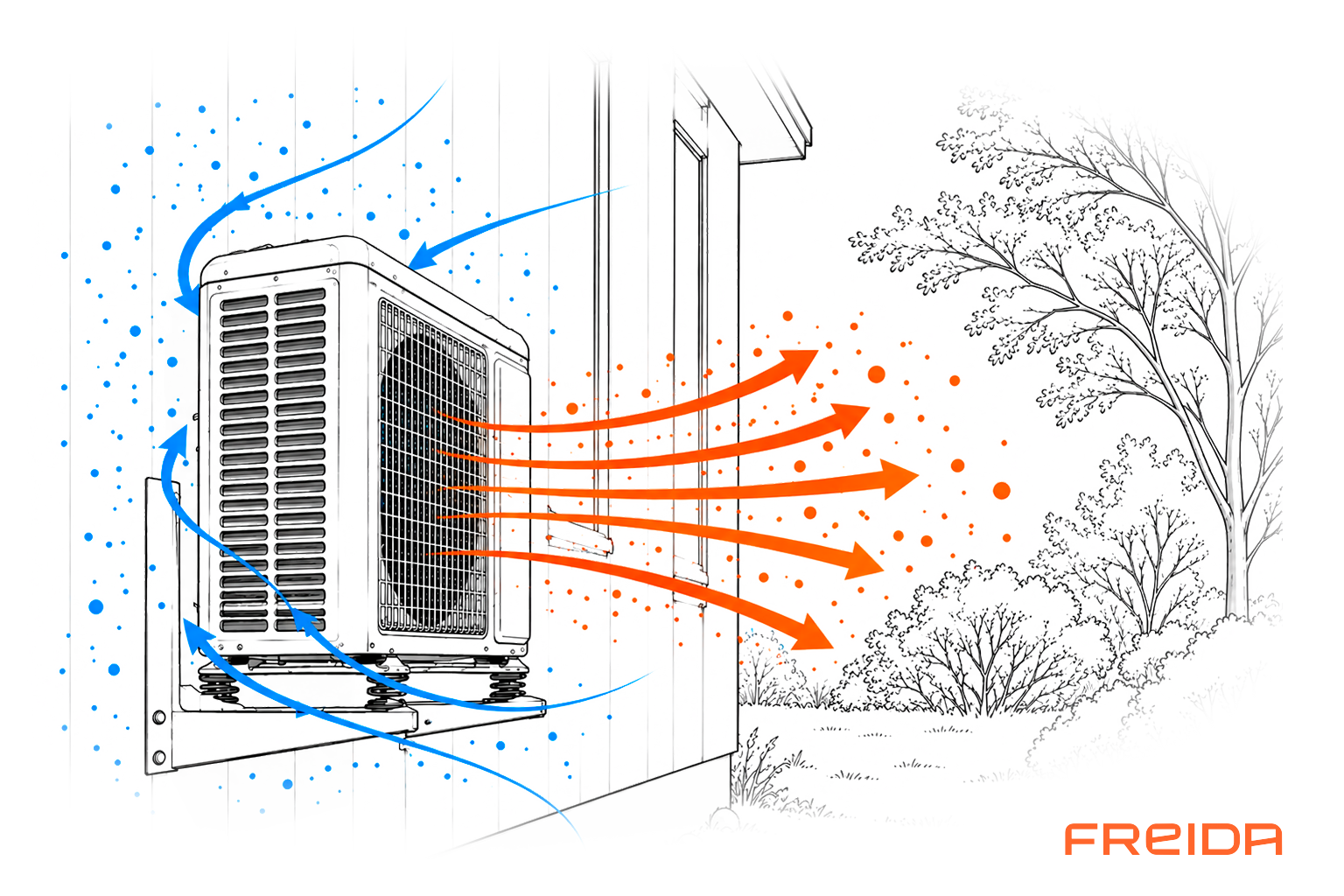
6. The outdoor unit blows the heat away
The outdoor fan continuously moves air through the heat exchanger, carrying the released heat away from the unit.
That explains something you can easily experience yourself: stand near the outdoor unit while the heat pump is cooling, and the air coming from it will feel warm. That heat has come, in part, from inside your home.
7. And the cycle starts again
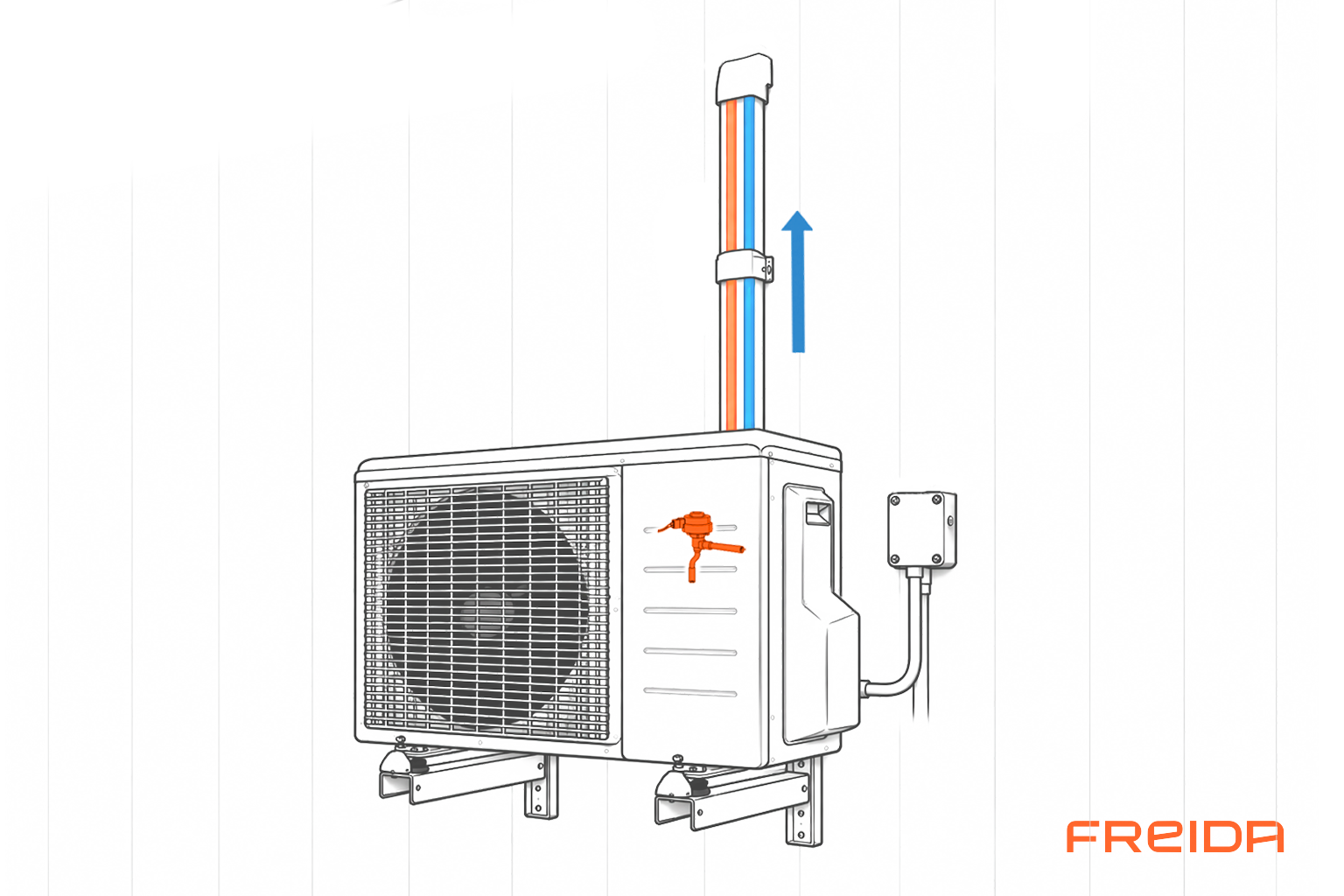
7. And the cycle starts again
Before returning indoors, the refrigerant passes through an expansion valve. This reduces its pressure and temperature, making it cold enough to absorb heat from the indoor air once again.
The refrigerant then returns to the indoor heat exchanger, and the cycle continues: heat is absorbed indoors, carried outside and released into the outdoor air – over and over again until your home reaches the desired temperature.
And then it all happens again: heat is picked up indoors, carried outside and released – over and over again until your home reaches the desired temperature.
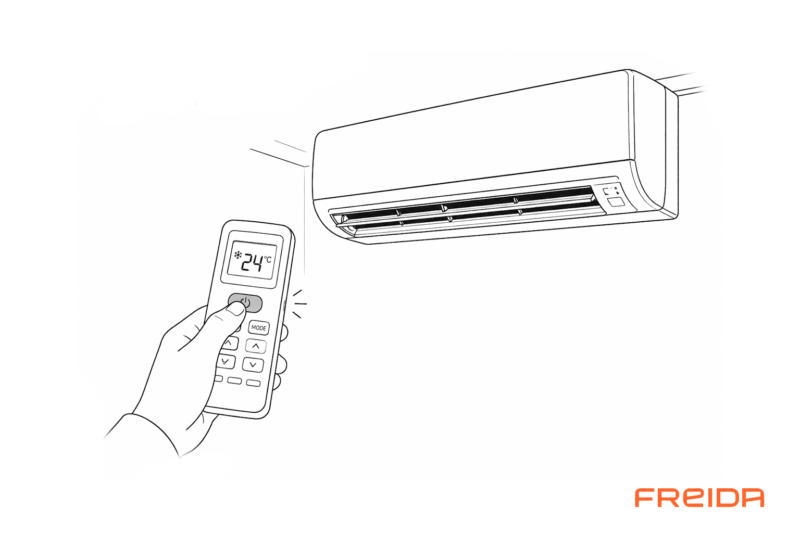
1. Switch off the air-to-air heat pump
Switch off the unit with the remote control before starting.
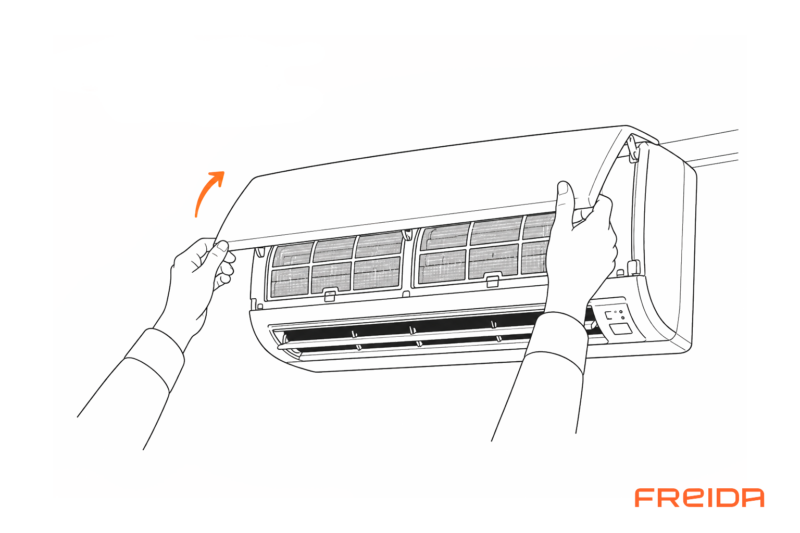
2. Open the front cover of the indoor unit.
Carefully lift the front cover of the indoor unit until it stays open.
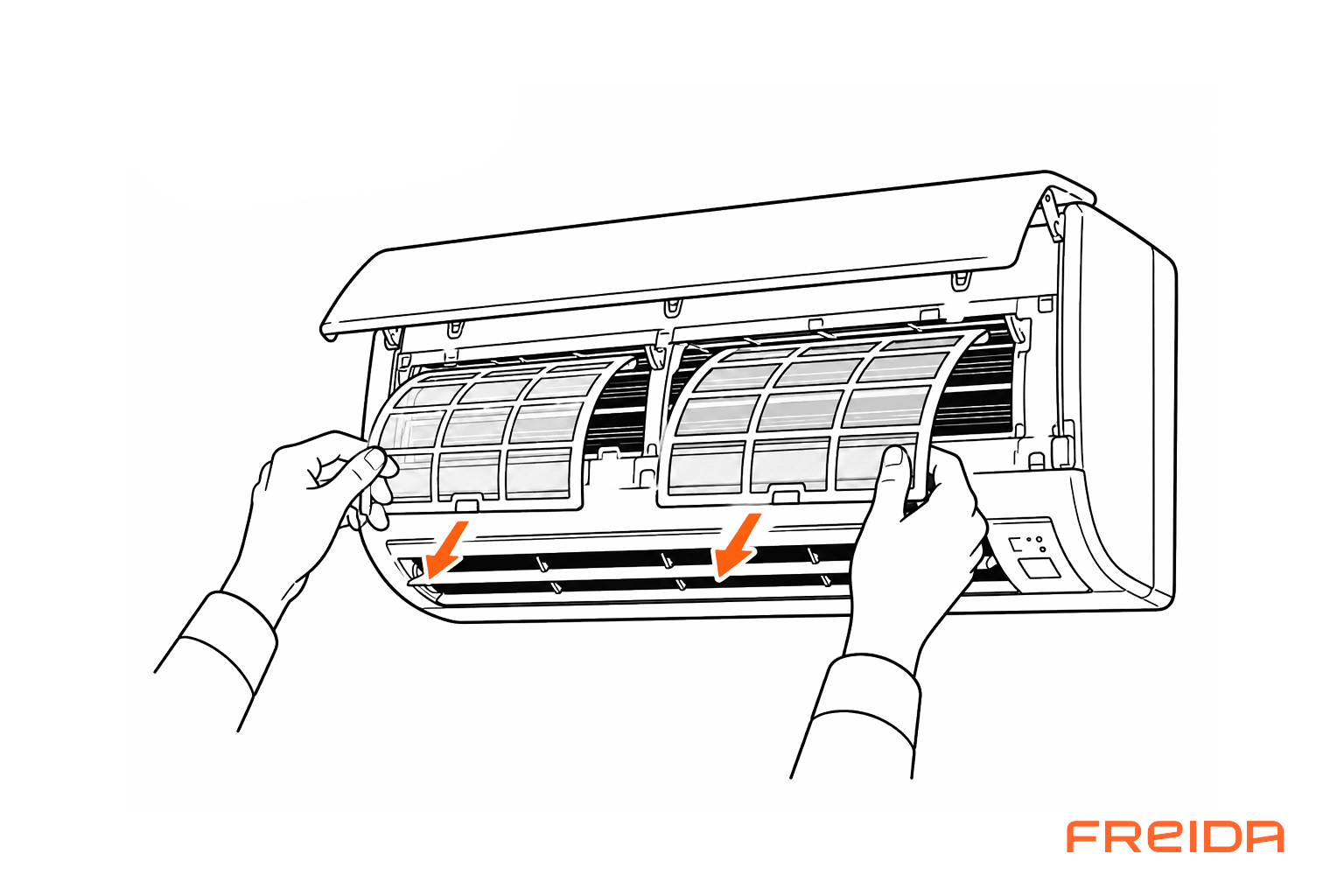
3. Carefully remove the coarse filters.
Release the filters carefully and pull them out of the indoor unit.
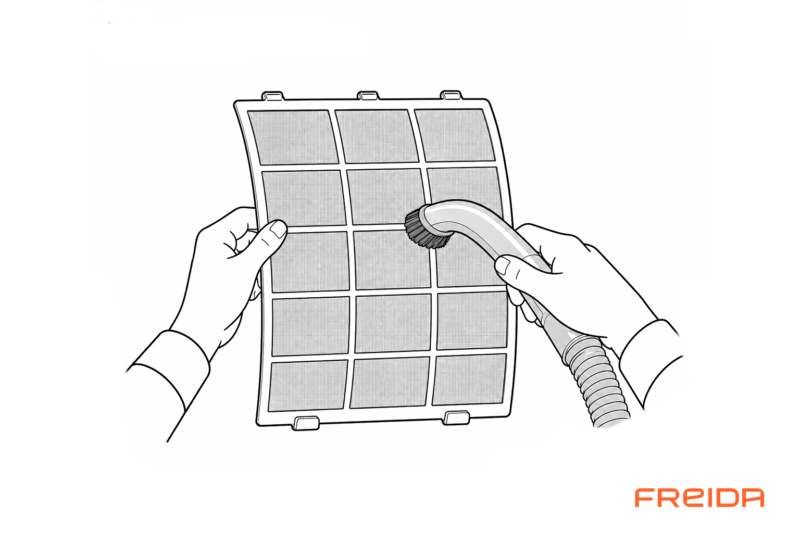
4. Vacuum the filters gently to remove dust and loose dirt.
Gently vacuum both sides of the filters to remove dust and loose dirt. Avoid pressing or damaging the filter mesh.
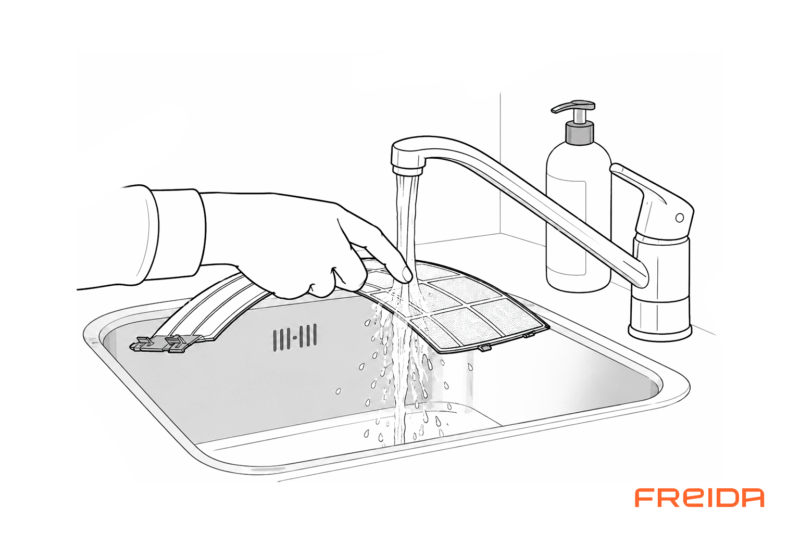
5. If visible dirt remains, rinse the filters with water.
If dirt remains, rinse the filters with clean lukewarm water.
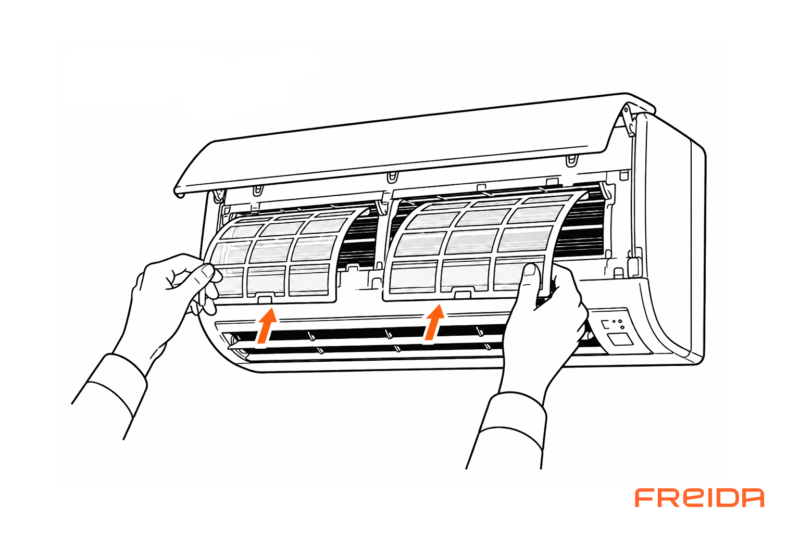
6. Refit the filters correctly and close the cover.
Slide the filters back into their correct position and make sure they sit securely. Close the front cover before switching the unit back on.
Freida tip: You can put the filters back while they’re still wet – no need to wait for them to dry.
1. Switch off the air-to-air heat pump
Switch off the unit with the remote control before starting.
2. Open the front cover of the indoor unit.
Carefully lift the front cover of the indoor unit until it stays open.
3. Carefully remove the coarse filters.
Release the filters carefully and pull them out of the indoor unit.
4. Vacuum the filters gently to remove dust and loose dirt.
Gently vacuum both sides of the filters to remove dust and loose dirt. Avoid pressing or damaging the filter mesh.
5. If visible dirt remains, rinse the filters with water.
If dirt remains, rinse the filters with clean lukewarm water.
6. Refit the filters correctly and close the cover.
Slide the filters back into their correct position and make sure they sit securely. Close the front cover before switching the unit back on.
Freida tip: You can put the filters back while they’re still wet – no need to wait for them to dry.
In short: how does an air-to-air heat pump work?
The basic idea is surprisingly simple: an air-to-air heat pump moves heat from one place to another.
In winter, it collects thermal energy from the outdoor air and transfers it into your home. In summer, the process is reversed – heat is collected from inside your home and released outdoors.
A refrigerant carries the heat between the indoor and outdoor units, while the compressor keeps the process running. Because the system moves existing heat instead of producing all of it directly from electricity, it can provide several times more heat energy than the electricity it consumes.
Different direction, same clever principle – comfortable temperatures all year round.
Frequently asked questions about how does an air-to-air heat pump work
An air-to-air heat pump transfers heat between outdoor and indoor air using a closed refrigerant circuit. In winter, it collects heat from the outdoor air and releases it inside. In summer, the process is reversed and heat is transferred from your home to the outdoors.
Even when the temperature is below freezing, outdoor air still contains thermal energy. The refrigerant circulating through the outdoor heat exchanger can absorb some of this energy, even at very low outdoor temperatures.
No. The indoor and outdoor air do not mix. Refrigerant circulates between the indoor and outdoor units through pipes and carries heat from one side to the other.
Yes. Electricity is needed to run the compressor, fans and other components. However, a heat pump moves heat rather than producing all of it directly from electricity, which means it can deliver several times more heat energy than the electrical energy it consumes.
When an air-to-air heat pump is used for cooling, the indoor unit absorbs heat from the room air. The refrigerant carries the heat to the outdoor unit, where it is released into the outdoor air. The cooler indoor air is then circulated back into the room.
Yes. Air-to-air heat pumps designed for Nordic conditions can operate at temperatures well below freezing. However, heating capacity and efficiency vary with outdoor temperature and between different heat pump models.
Find the right
heat pump for you

No cold corners.
No sudden heat.
That’s Nordic Comfort.