
Regular maintenance helps your air-to-air heat pump perform efficiently and reliably year after year. Some of the most important maintenance tasks are simple things you can do yourself, while deeper cleaning, troubleshooting and technical work are best left to a professional.
The key is knowing what to check, how to do it correctly and where to draw the line. Here, Freida’s heat pump professionals share their practical advice for keeping your air-to-air heat pump in good condition – including a few tricks worth knowing.
Do these and leave those for us.
You can do these yourself
Leave these to a professional
You can do these air-to-air heat pump maintenance tasks yourself
Do it yourself
1. Clean the air-to-air heat pump filters regularly
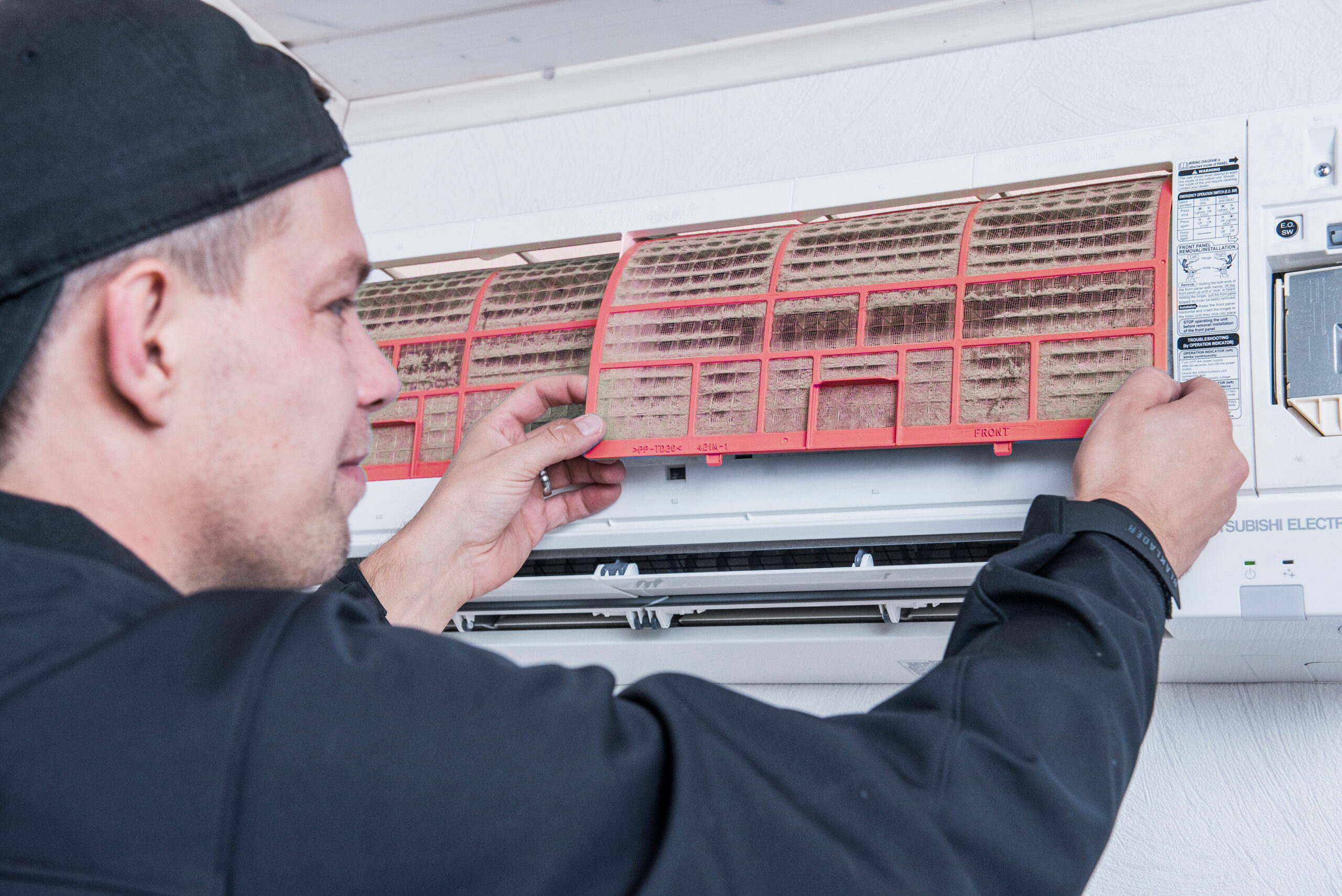
Cleaning the filters is one of the most important maintenance tasks you can do yourself. The coarse filters in the indoor unit collect dust, pet hair and other particles from the air before they reach deeper into the heat pump.
As dirt builds up, airflow through the indoor unit becomes restricted. This can reduce the performance of the heat pump and make it work harder than necessary. Keeping the filters clean therefore helps maintain good airflow and efficient operation.
As a general rule, the filters should be checked and cleaned approximately every 2–4 weeks. However, there is no single interval that is right for every home. How quickly the filters become dirty depends on the home and its indoor air.
If you have pets, for example, the filters may need cleaning more frequently. The same applies if the unit is installed in an environment with a lot of dust or other airborne particles.
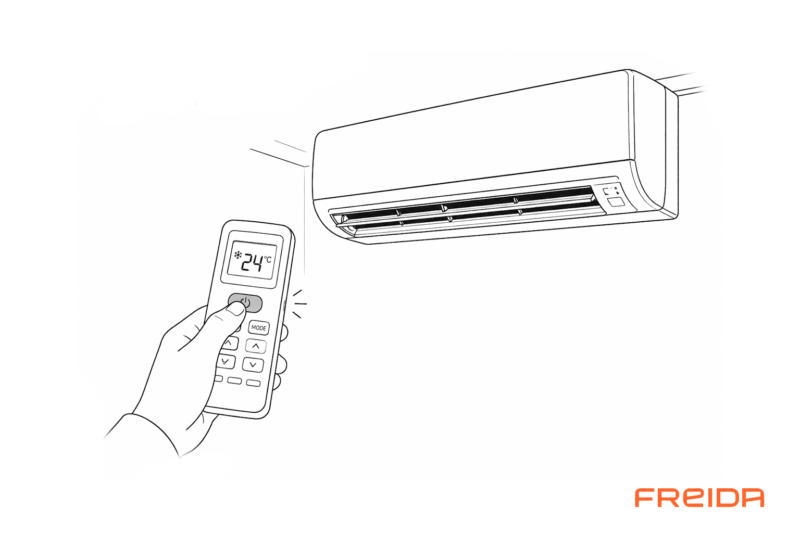
1. Switch off the air-to-air heat pump
Switch off the unit with the remote control before starting.
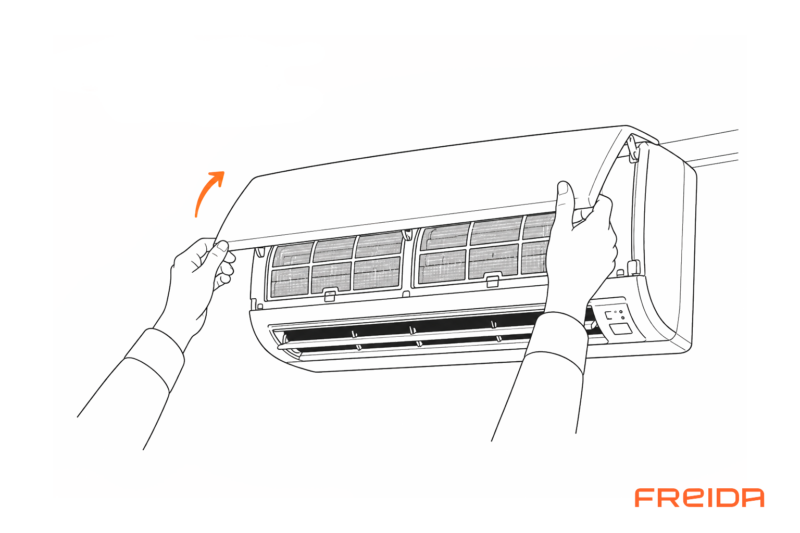
2. Open the front cover of the indoor unit.
Carefully lift the front cover of the indoor unit until it stays open.
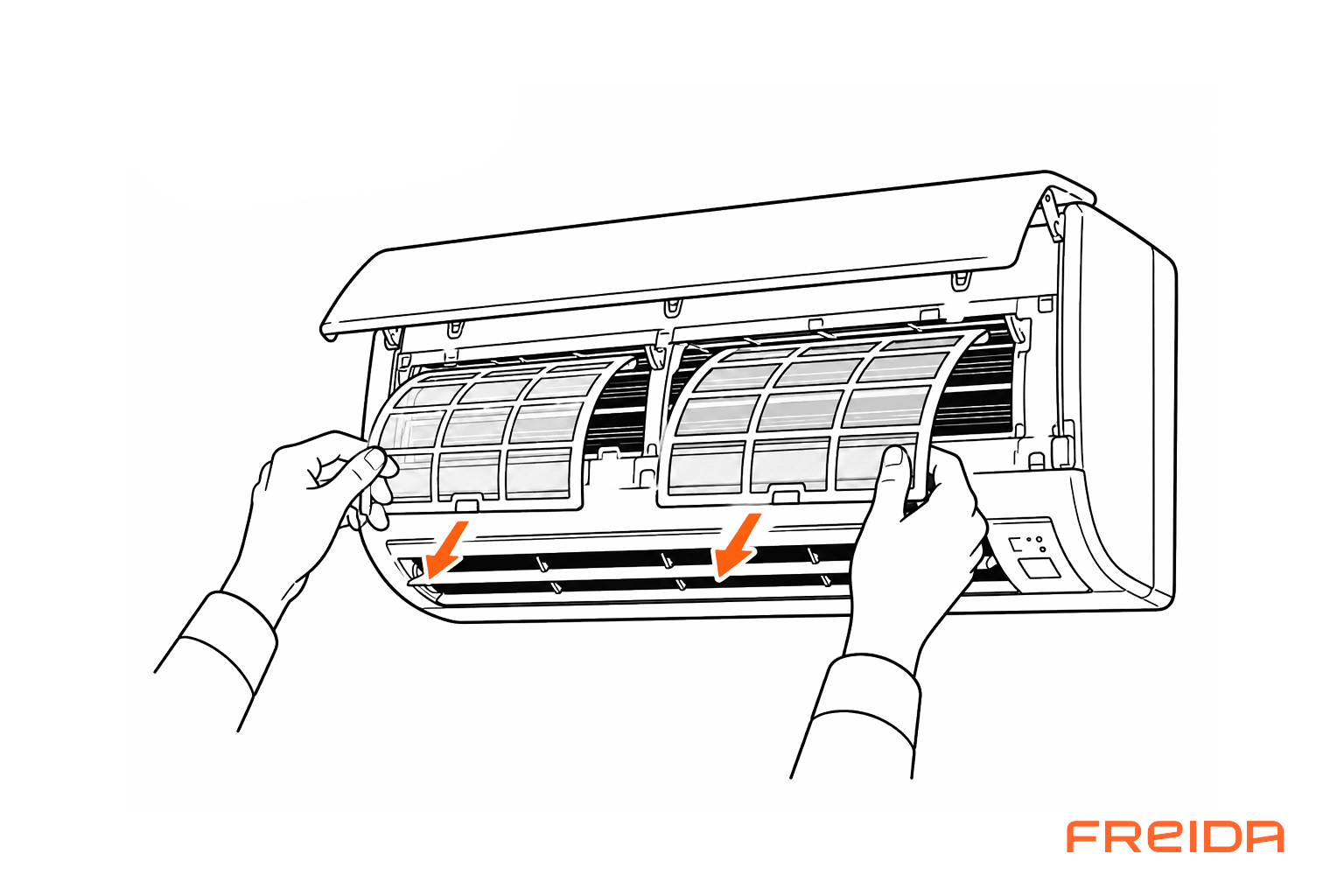
3. Carefully remove the coarse filters.
Release the filters carefully and pull them out of the indoor unit.
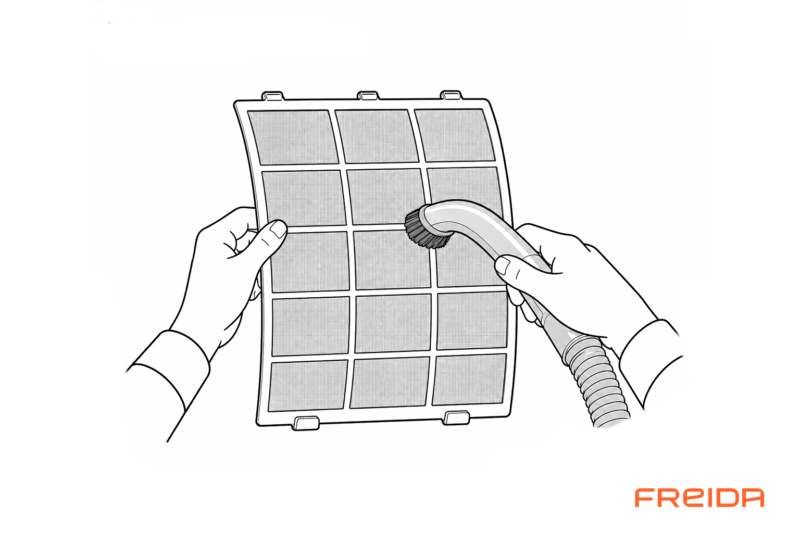
4. Vacuum the filters gently to remove dust and loose dirt.
Gently vacuum both sides of the filters to remove dust and loose dirt. Avoid pressing or damaging the filter mesh.
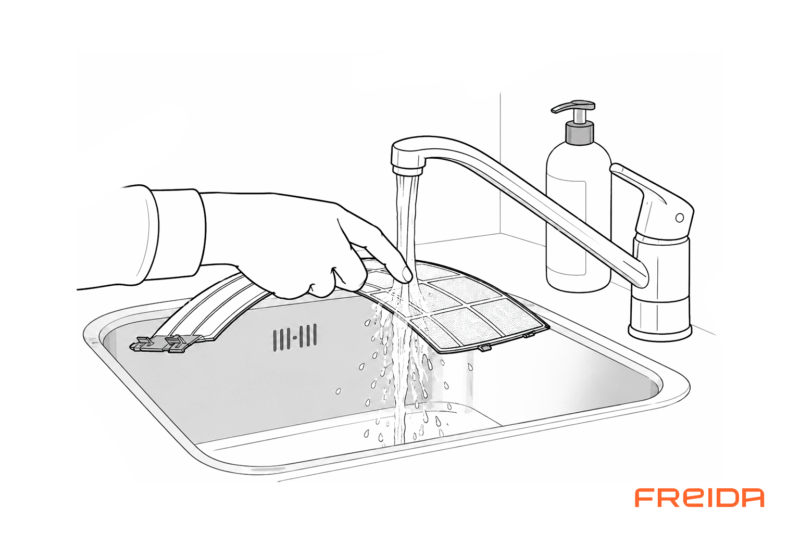
5. If visible dirt remains, rinse the filters with water.
If dirt remains, rinse the filters with clean lukewarm water.
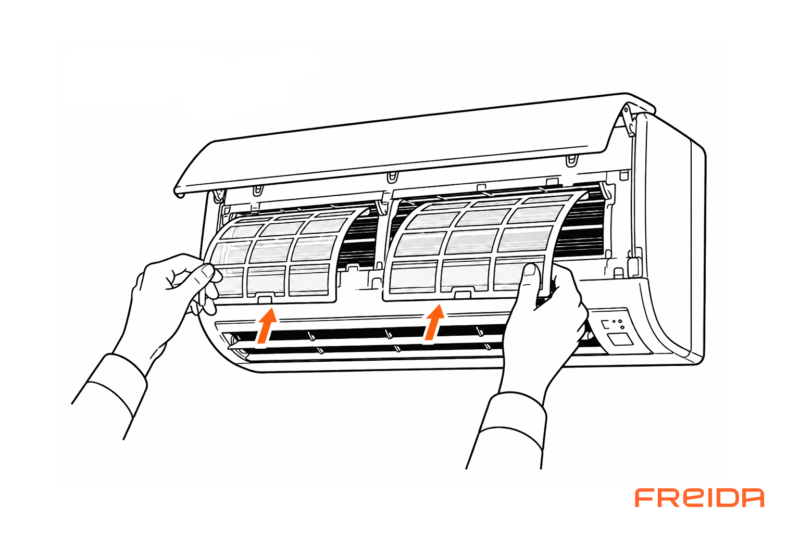
6. Refit the filters correctly and close the cover.
Slide the filters back into their correct position and make sure they sit securely. Close the front cover before switching the unit back on.
Freida tip: You can put the filters back while they’re still wet – no need to wait for them to dry.
1. Switch off the air-to-air heat pump
Switch off the unit with the remote control before starting.
2. Open the front cover of the indoor unit.
Carefully lift the front cover of the indoor unit until it stays open.
3. Carefully remove the coarse filters.
Release the filters carefully and pull them out of the indoor unit.
4. Vacuum the filters gently to remove dust and loose dirt.
Gently vacuum both sides of the filters to remove dust and loose dirt. Avoid pressing or damaging the filter mesh.
5. If visible dirt remains, rinse the filters with water.
If dirt remains, rinse the filters with clean lukewarm water.
6. Refit the filters correctly and close the cover.
Slide the filters back into their correct position and make sure they sit securely. Close the front cover before switching the unit back on.
Freida tip: You can put the filters back while they’re still wet – no need to wait for them to dry.
Do it yourself
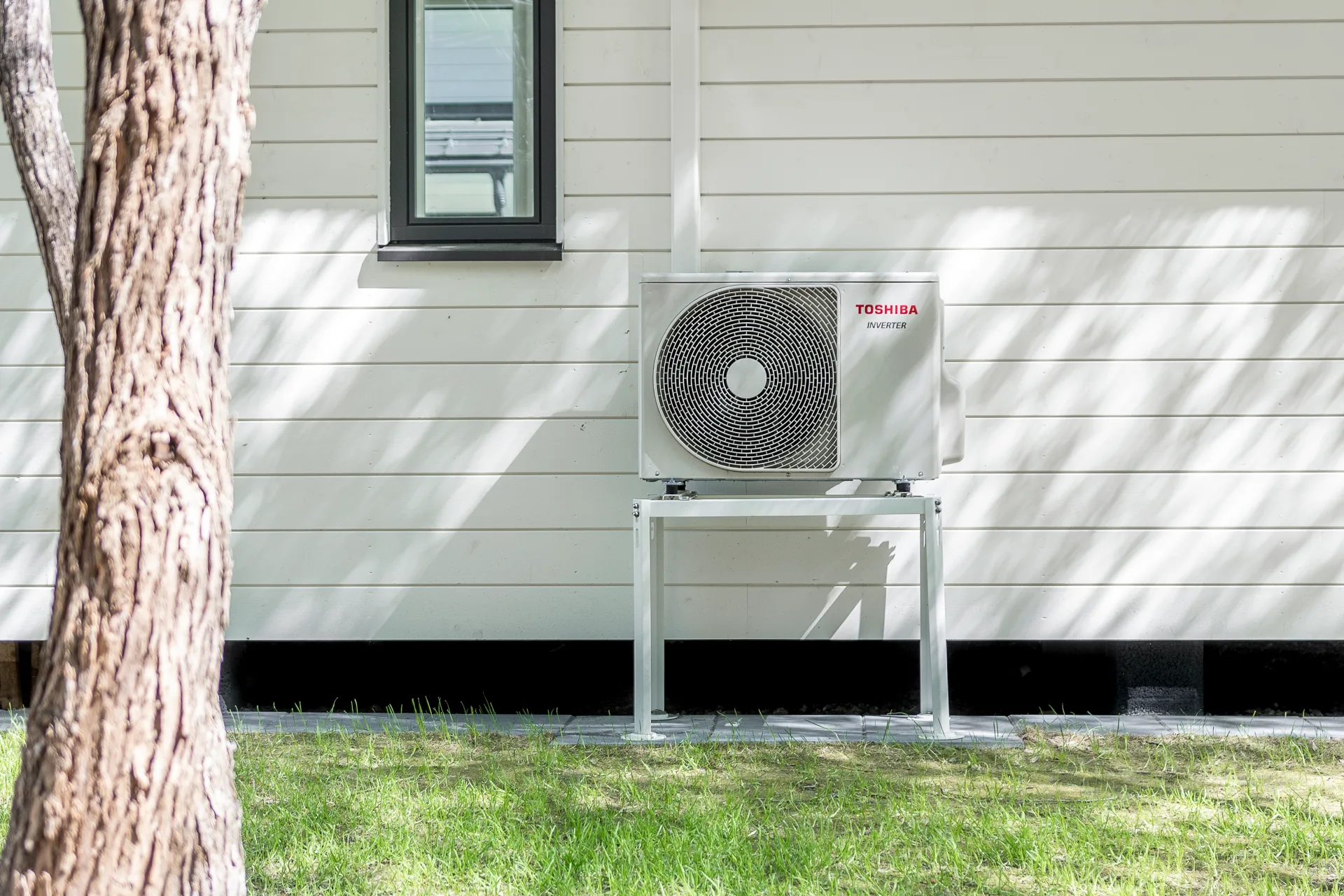
2. Keep the outdoor unit and its surroundings clean
The second important maintenance task is keeping the outdoor unit clear.
An air-to-air heat pump moves large amounts of air through the outdoor unit, which means unrestricted airflow is essential for proper operation. Leaves, twigs, snow and other debris can accumulate around the unit throughout the year.
Check the outdoor unit regularly and remove loose debris from around it. Make sure vegetation or stored items are not blocking the airflow either.
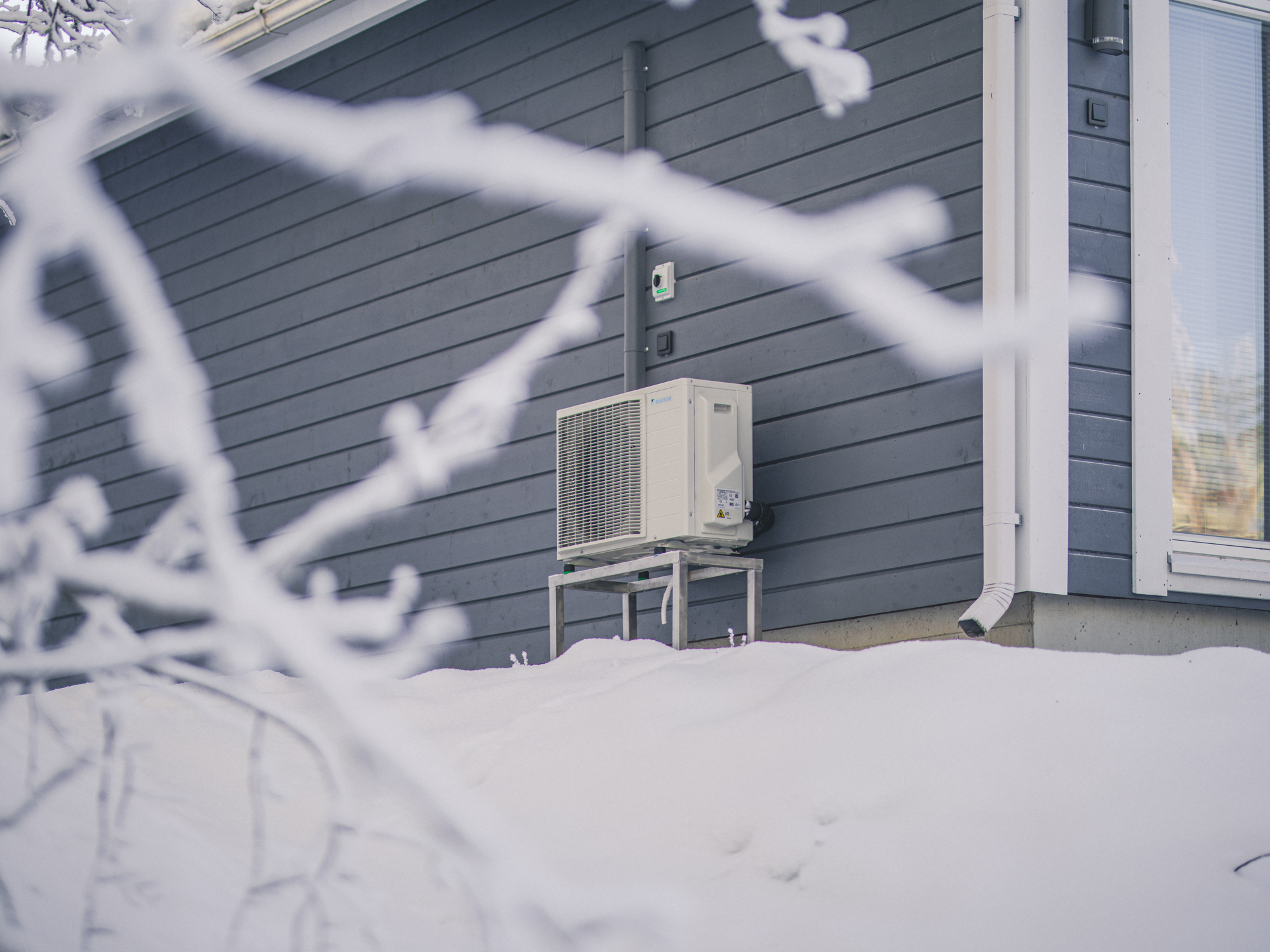
Autumn and winter deserve particular attention. Leaves can collect behind or underneath the outdoor unit in autumn, while snow can gradually build up around it during winter.
Remember the defrost water in winter
When an air-to-air heat pump is used for heating in cold weather, frost can form on the outdoor heat exchanger. The heat pump periodically removes this frost with an automatic defrost cycle.
This produces water, which needs to be able to drain away from the outdoor unit.
Some ice underneath or around an outdoor unit can therefore be perfectly normal during winter. However, large amounts of ice can eventually cause problems if the water has nowhere to go.
Do not try to chip or break ice away from the heat exchanger or other delicate components with tools. The unit contains parts that can easily be damaged. You can melt it down with carefully pouring lukewarm water on the ice while the system is switched off.
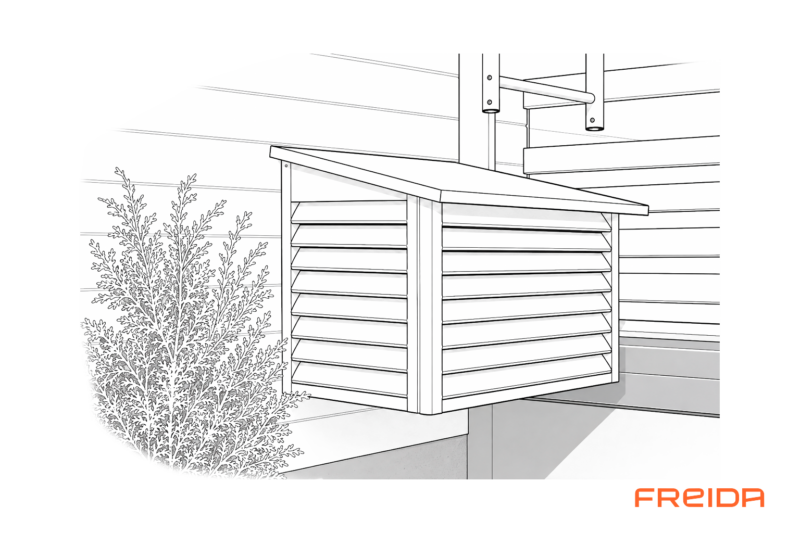
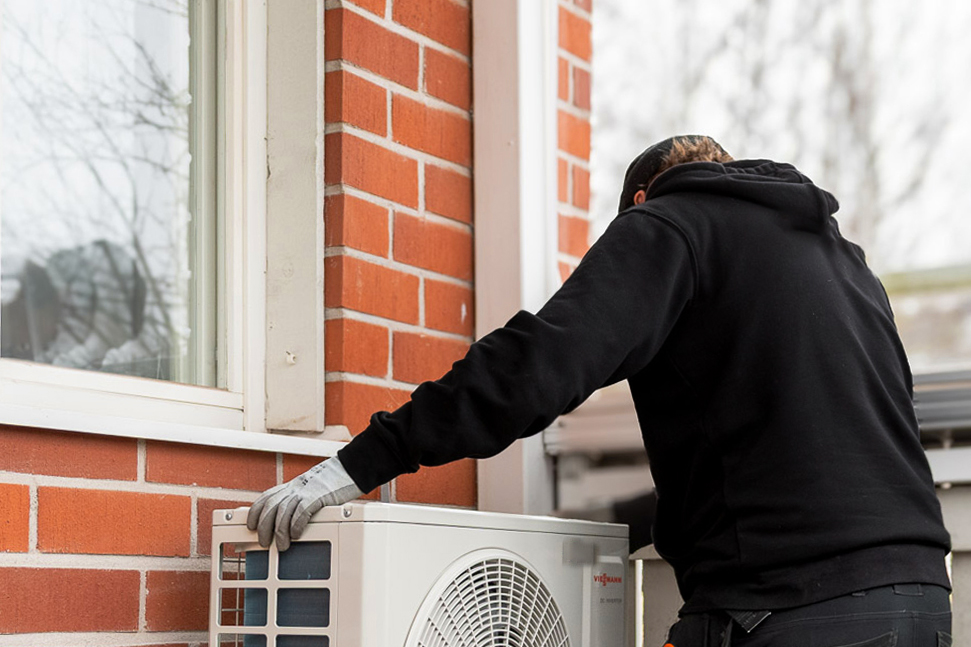
A properly designed cover can help protect the outdoor unit from falling snow, leaves and debris.
However, the cover must leave enough open space for the heat pump to move air freely. A cover that is too enclosed can restrict airflow and interfere with the operation of the unit.
This is particularly important when building a cover yourself. The goal is to protect the unit – not to enclose it.
Do it yourself
3. Check the condensate drainage before the cooling season
If you use your air-to-air heat pump for cooling, checking the condensate drainage should be part of your spring maintenance.
When the heat pump cools indoor air, moisture in the air condenses on the cold heat exchanger inside the indoor unit. This water collects in a condensate tray and is directed away through a drain pipe.
If the drain becomes blocked or the water cannot flow correctly, it can eventually cause water to leak from the indoor unit.
Fortunately, there is a simple way to check that the drainage is working. See below.
Carefully pour a small amount of water into the condensate tray inside the indoor unit.
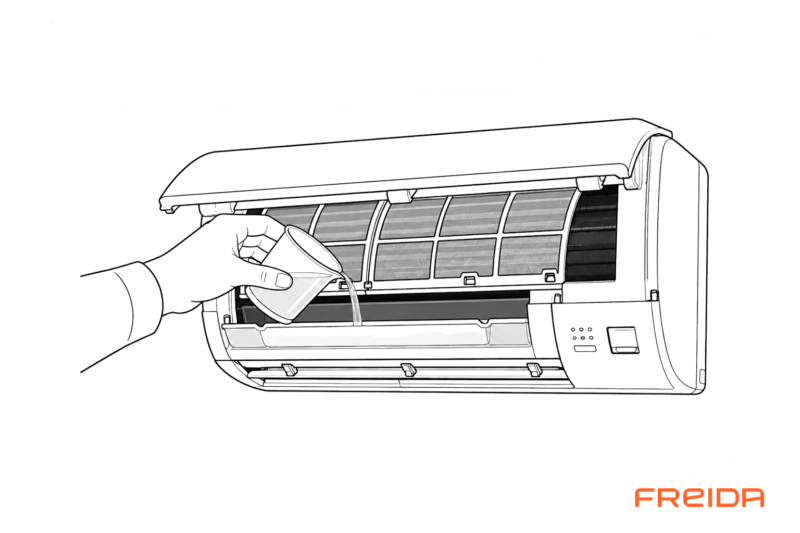
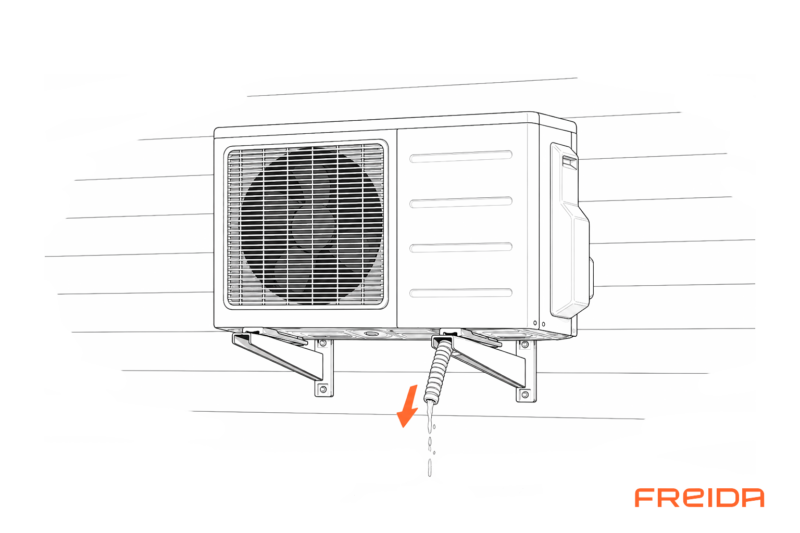
Then check the end of the condensate drain and make sure the water flows freely through the pipe and reaches the intended drainage point.
This gives you a practical way to test the entire drainage route instead of waiting until the heat pump starts producing significant amounts of condensate during hot weather.
What if the condensate water does not drain?
If the water does not drain normally, stop the test and do not add any more water. A blocked, damaged or incorrectly installed drain should be checked before using the heat pump extensively for cooling. If you are unsure what is causing the problem, contact a professional for an inspection.
Freida Care: 010-880 03 80
Freida tip: Test the condensate drainage before the first hot days of summer. A drain that worked perfectly last year may have become partially or completely blocked while the heat pump was not being used for cooling.
Do it yourself
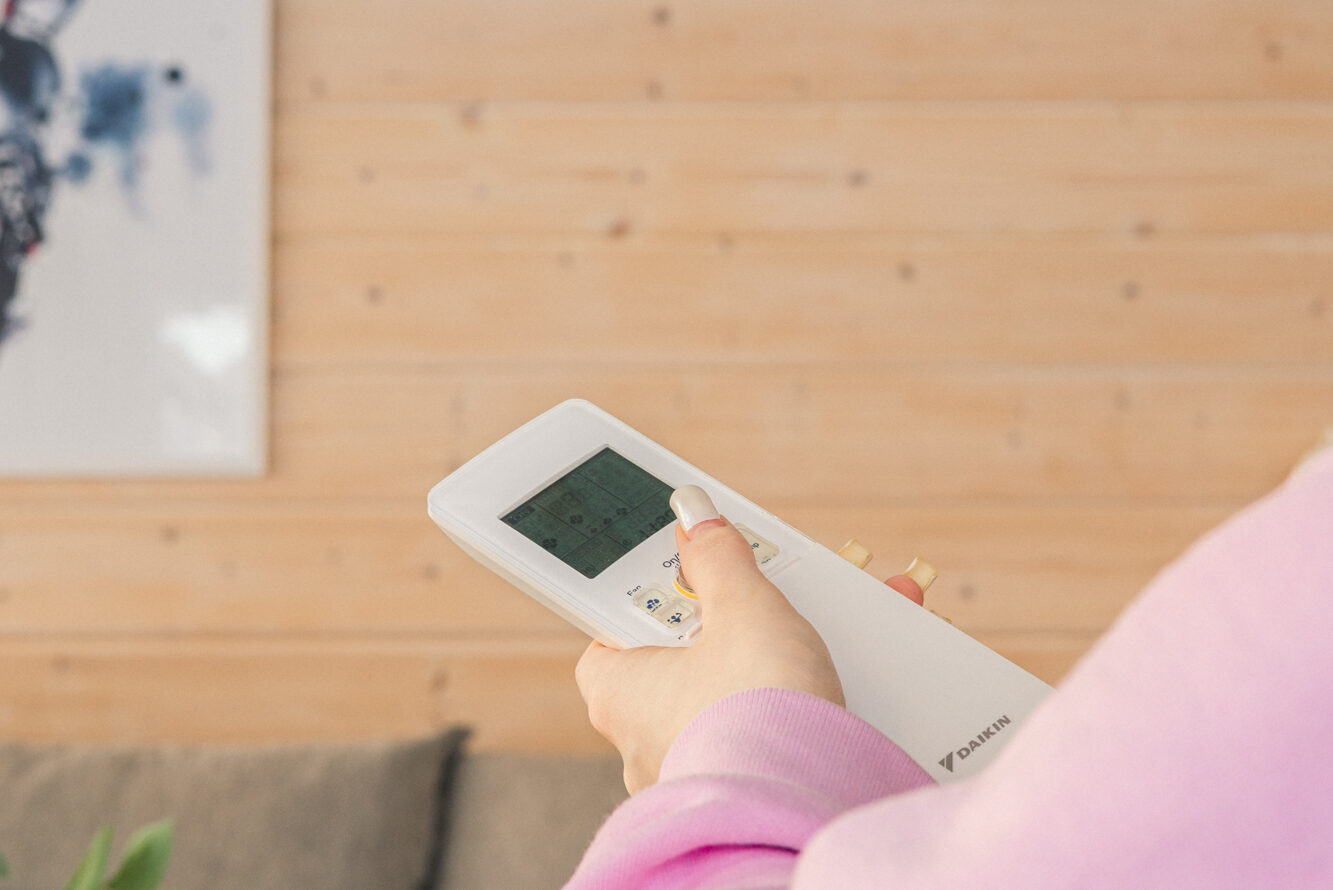
4. Test heating and cooling before the season starts
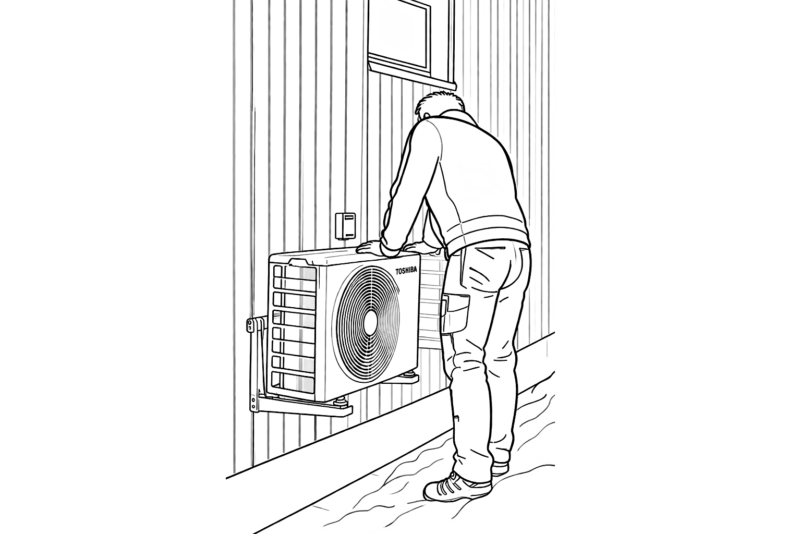
If you use your air-to-air heat pump for both heating and cooling, test each function before the beginning of the season. It is much better to discover a problem on a mild spring or autumn day than during the first heatwave or cold spell.
Test cooling before summer
Switch the heat pump to cooling mode and set the target temperature clearly below the current room temperature.
Allow the unit to run for a while and check that the air coming from the indoor unit becomes noticeably cool.
While the unit is running, listen for unusual noises and make sure it operates normally. This is also a good opportunity to check the condensate drainage.
Test heating before autumn
Switch the unit to heating mode and set the target temperature clearly above the current room temperature.
Allow the heat pump to run for approximately 10–20 minutes and check that the indoor unit is blowing noticeably warm air.
You are not trying to measure the exact heating output yourself. The idea is simply to identify obvious changes in operation.
If the heat pump used to produce plenty of warm air but now struggles to do so, for example, there may be something worth investigating before the heating season begins.
Leave these air-to-air heat pump maintenance tasks to a professional
Professional work
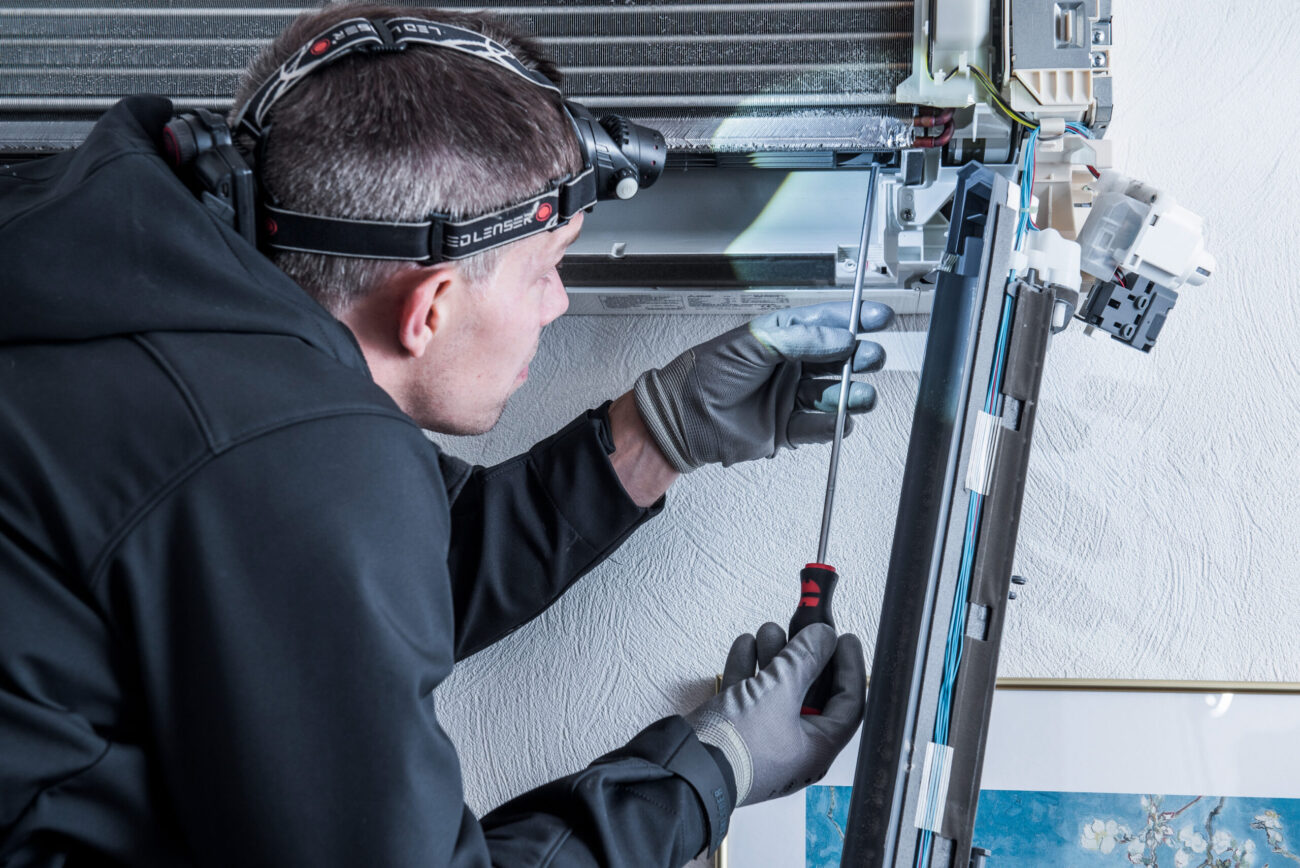
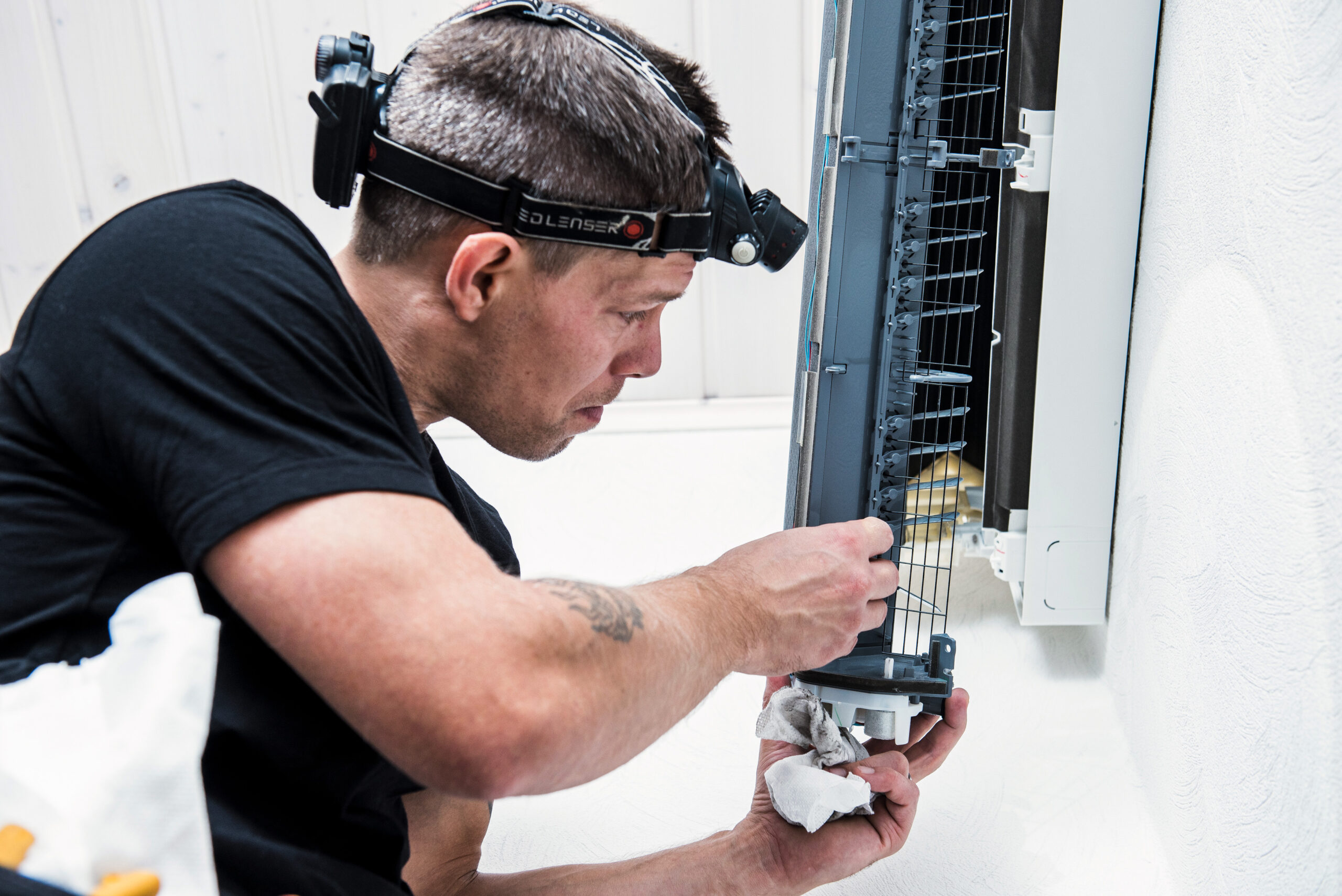
1. Leave deep cleaning of the air-to-air heat pump to a professional
Cleaning the filters does not mean that the entire indoor unit is clean.
The filters catch a large proportion of airborne particles, but they cannot stop everything. Over time, fine dust and other contaminants make their way deeper into the indoor unit.
Dirt can accumulate on the heat exchanger, fan and other internal surfaces. The installation location also makes a difference. For example, airborne grease can contribute to dirt build-up in a heat pump located close to a kitchen.
This is why filter cleaning and professional deep cleaning should be considered two different maintenance tasks.
Filter cleaning is routine maintenance you do yourself. Professional cleaning takes care of areas that normal home maintenance cannot reach.
Professional work
Don’t try to clean the heat exchanger fins yourself
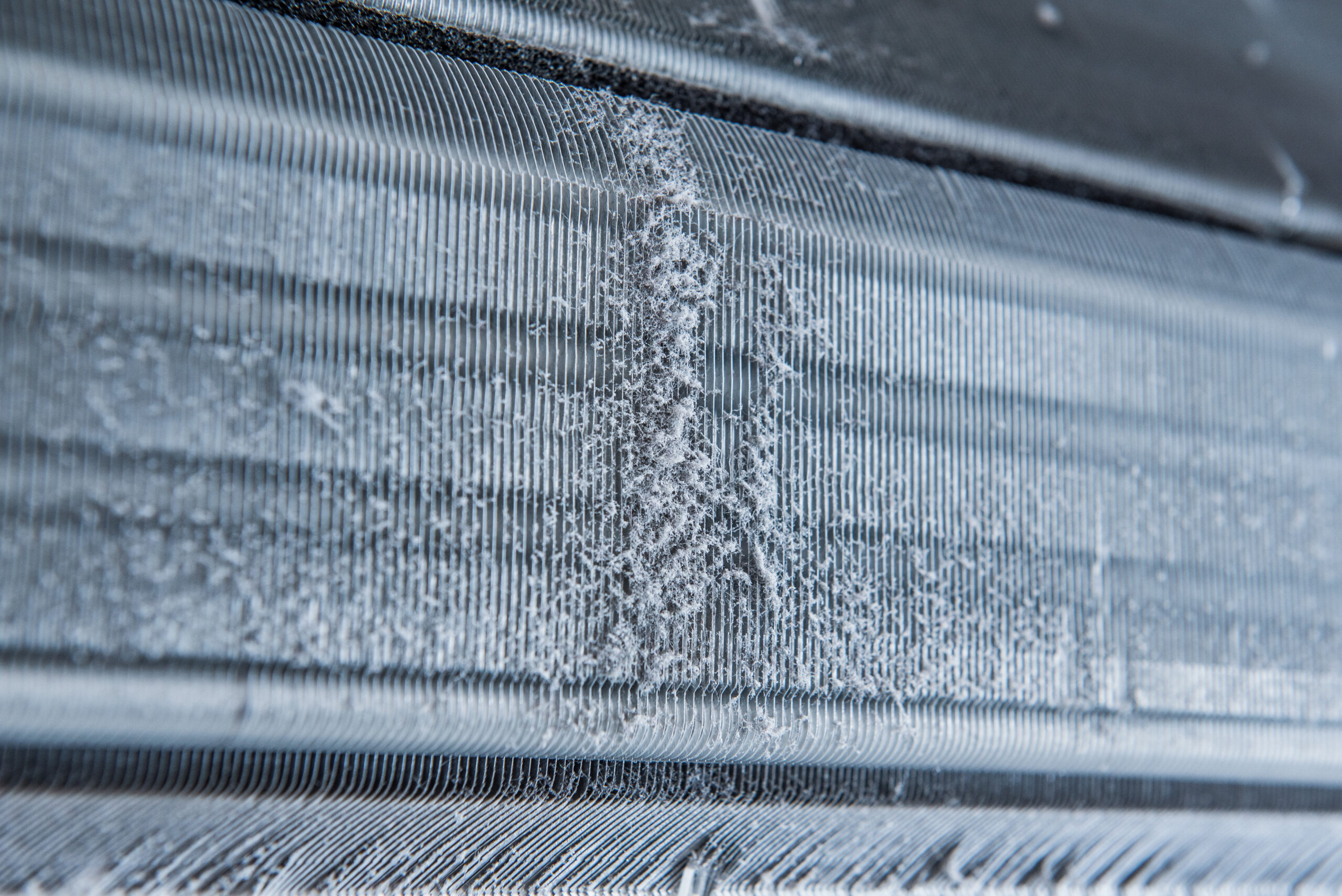
Once you remove the filters, you can see the thin metal fins of the heat exchanger underneath. If they look dusty, it can be tempting to clean them with a vacuum cleaner, brush or cloth.
This is best left to a professional.
The fins are extremely thin and bend easily. Damaged or bent fins can restrict the airflow through the heat exchanger and affect the performance of the unit.
There is also more to a proper deep clean than removing visible dust from the surface. A professional can access and clean the necessary components without damaging the delicate parts of the indoor unit.
Professional work
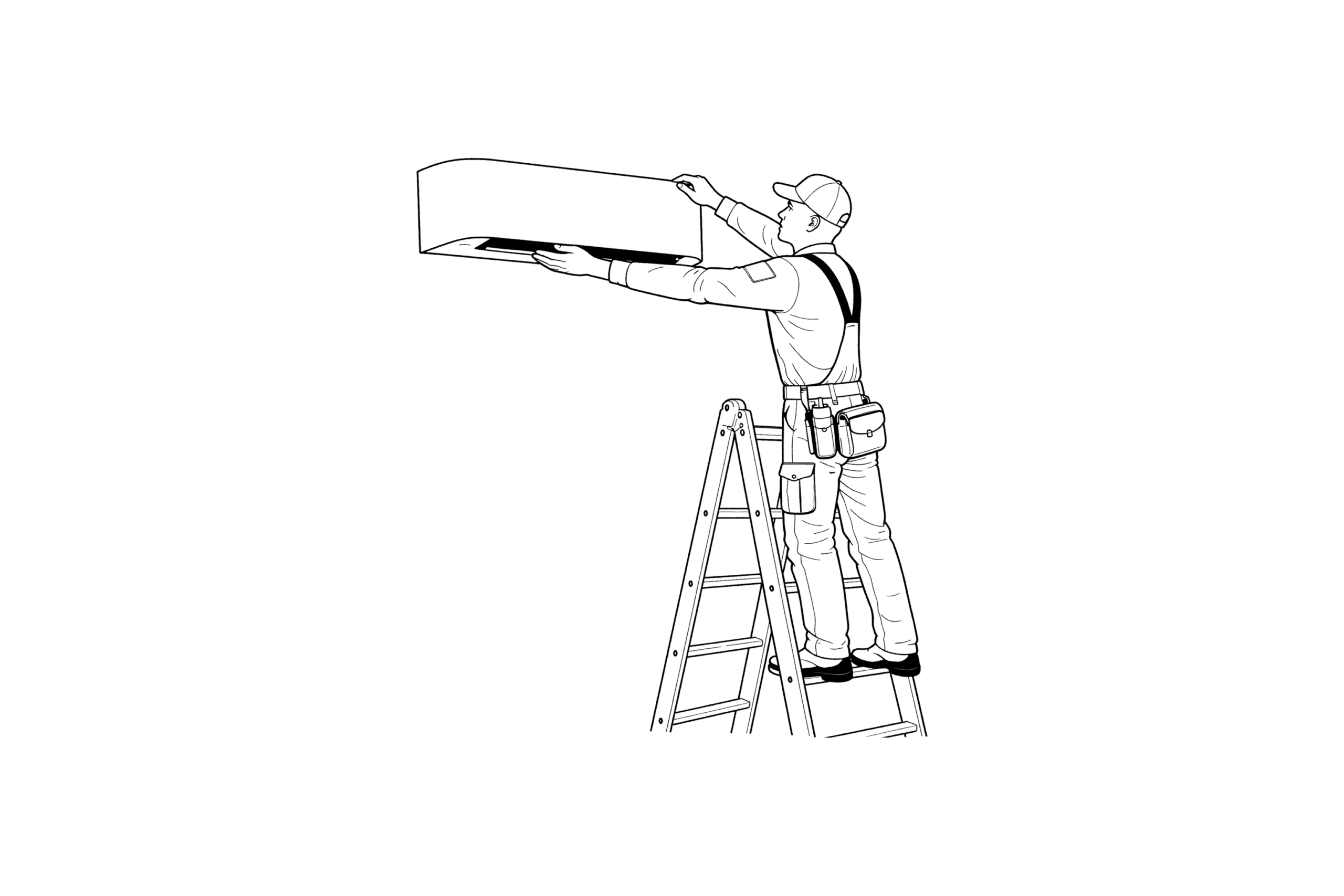
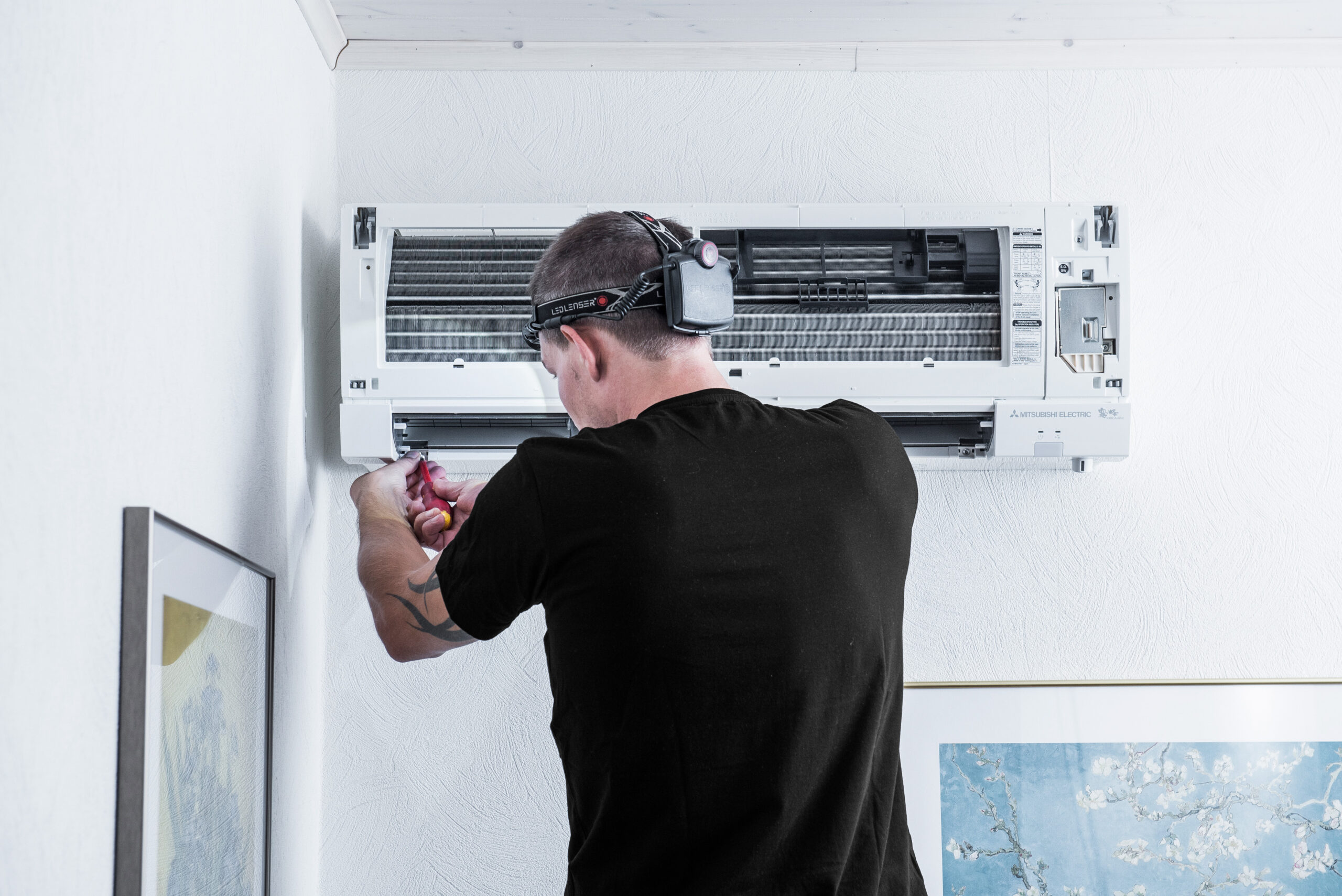
2. Leave troubleshooting and technical repairs to a professional
Not every change in the behaviour of an air-to-air heat pump means that something is broken. Sometimes the cause is surprisingly simple: dirty filters, an incorrect operating mode or restricted airflow can all affect how the unit performs.
When does an air-to-air heat pump need service?
It is worth contacting a professional if:
- heating or cooling performance has clearly deteriorated
- airflow remains weak even after cleaning the filters
- the indoor unit produces an unusual or persistent smell
- the heat pump makes noises it did not make before
- water leaks from the indoor unit
- the outdoor unit develops unusual or excessive ice build-up
- the heat pump displays an error code
- the unit repeatedly stops or behaves abnormally
Freida note: Always follow the manufacturer’s service and maintenance instructions. For some models, regular maintenance in accordance with the manufacturer’s recommendations may be required to keep the warranty valid.
Freida Care
Whether your heat pump needs scheduled maintenance, fault repair or warranty service, Freida handles it with care, expertise and attention to detail.
Keep your air-to-air heat pump in good condition
Regular maintenance helps your air-to-air heat pump stay efficient and reliable year after year. Clean the filters, keep the outdoor unit clear and perform the simple seasonal checks yourself. When deeper cleaning, troubleshooting or repairs are needed, leave the work to a professional.
Need help with your air-to-air heat pump? Freida is here for you throughout its lifetime.
Frequently asked questions about air-to-air heat pump maintenance
Filters should generally be cleaned every 2–4 weeks, while the outdoor unit and other basic maintenance points should be checked regularly. Professional cleaning is typically needed every few years, depending on how much the heat pump is used and how quickly it becomes dirty.
There are different types of air-to-air heat pump service depending on the condition of the unit and what it needs. These can include professional cleaning, troubleshooting and repairs, as well as warranty service.
A cleaning service focuses on removing dirt that has accumulated deeper inside the unit, while troubleshooting and repair services are used when the heat pump is not operating as it should. Warranty service covers eligible faults and repairs according to the applicable warranty terms.
You can take care of regular maintenance such as cleaning the filters, keeping the outdoor unit clear, checking the condensate drainage and testing heating and cooling. Deep cleaning, troubleshooting and technical repairs should be left to a professional.
Reduced heating or cooling performance, weak airflow, unusual smells or noises, water leaks, excessive ice build-up and error codes can all indicate that the heat pump should be checked by a professional.
Yes. A clean and well-maintained air-to-air heat pump can operate more efficiently and save up to 20-30% more energy compared with a poorly maintained unit. Regular filter cleaning and professional maintenance help maintain good airflow, performance and energy efficiency over time.
Water leaking from the indoor unit can be caused by a blocked or incorrectly draining condensate pipe, particularly during cooling. If the drainage does not work normally or the cause is unclear, the unit should be checked by a professional.
No cold corners.
No sudden heat.
That’s Nordic Comfort.