
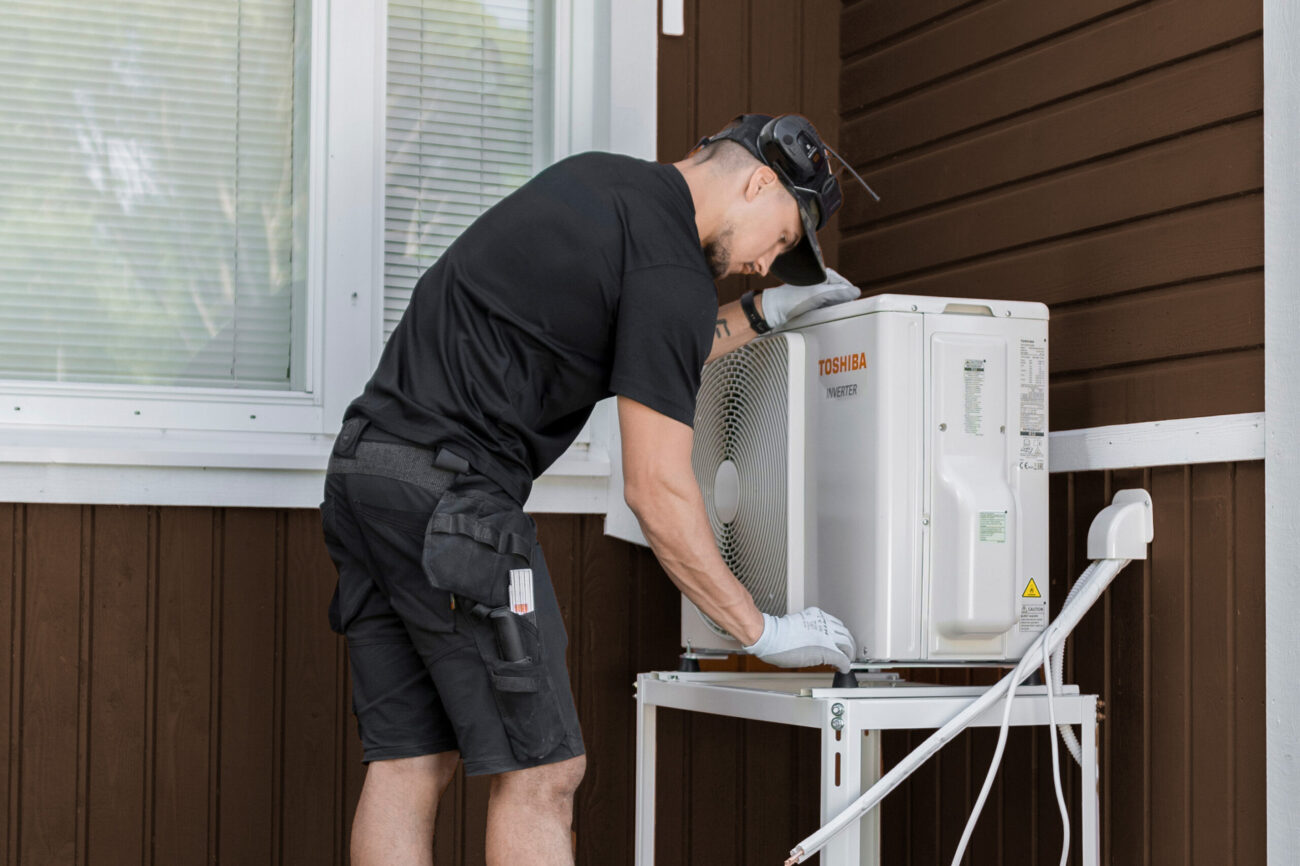
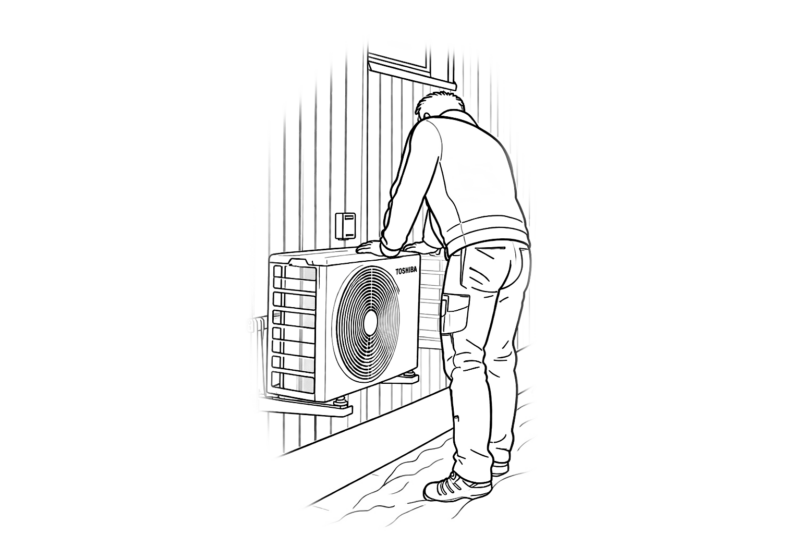
Air-to-air heat pump condensate is perfectly normal. It means the unit is working properly, especially while cooling.
Condensate forms when indoor moisture condenses on the heat pump’s coil and is carried away through the drain piping.
Condensate is a normal part of operation, but if it isn’t routed correctly it can damage the building. That’s why proper drainage should be planned at installation and checked during use.

Why does condensate control matter?
When condensate water drains as intended, your air-to-air heat pump runs safely and efficiently. If water runs staright into walls or foundations, it can lead to moisture damage.
Proper installation, regular checks and professional servicing are key to preventing risks.
We suggest ensuring the planning and installation are done properly when choosing an air-to-air heat pump installer.
Freida plans and installs each air-to-air heat pump specifically for your home, backed by experience from two decades and 130,000 installations in Nordic contitions.
Frequently asked questions about condensate from your air-to-air (FAQ)
The largest amount of condensation water is produced during summer when the air-to-air heat pump is used for cooling. This happens as warm, humid air is cooled inside the unit.
During winter, condensation water forms on the outdoor unit. Air-to-air heat pumps designed for Nordic conditions regularly run defrost cycles to melt frost and ice that build up on the unit.
As a result, a significant amount of ice can accumulate beneath the outdoor unit during winter. This should be taken into account when planning the installation location of the air-to-air heat pump.
Condensate water from the indoor unit is carried away through a drain pipe.
At the outdoor unit it usually drains through holes in the base or a separate outlet pipe.
The amount varies with conditions. On warm, humid days it can be several litres a day – and that’s perfectly normal.
During installation, condensate water must be directed properly. Practically this means enough slope in the piping so water flows away without obstruction.
If a slope isn’t possible, a condensate pump can be used as the solution.
Regular checks can help prevent blockages.
When cleaning the indoor unit filters, typically every 2–4 weeks, it is good to check that the drain tray and condensate pipe are free from dirt and debris.
You should also make sure that water can flow freely away from the outdoor unit and does not collect around the drainage area.
In apartment buildings, condensate can be led to a floor drain, the sewer, or collected in a separate container.
The key is not to let water run along the building structure – long‑term moisture can cause damage.
Make sure that:
- condensate is directed correctly
- drain pipes are open
- the unit is serviced regularly
If you notice moisture or leaks, act immediately and contact a professional. Small, ongoing leaks can grow into serious damage.
Yes. During winter, frost and ice naturally build up on the outdoor unit. The heat pump regularly melts this ice during its defrost cycle, creating water that drains beneath the unit.
If ice does accumulate:
- Turn off the unit and melt the ice using warm water.
- Do not use tools or a hot air gun, as they may damage the unit.
That should not happen when an air-to-air heat pump runs normally. If the indoor unit starts dripping water inside, it’s often a blocked drain pipe, incorrect slope in the piping, or some other issue stopping proper drainage.
If you see water around the indoor unit, turn it off and find the cause as soon as possible or call a professional.
Freida Care
Whether your heat pump needs scheduled maintenance, fault repair or warranty service, Freida handles it with care, expertise and attention to detail.
Find the right
heat pump for you
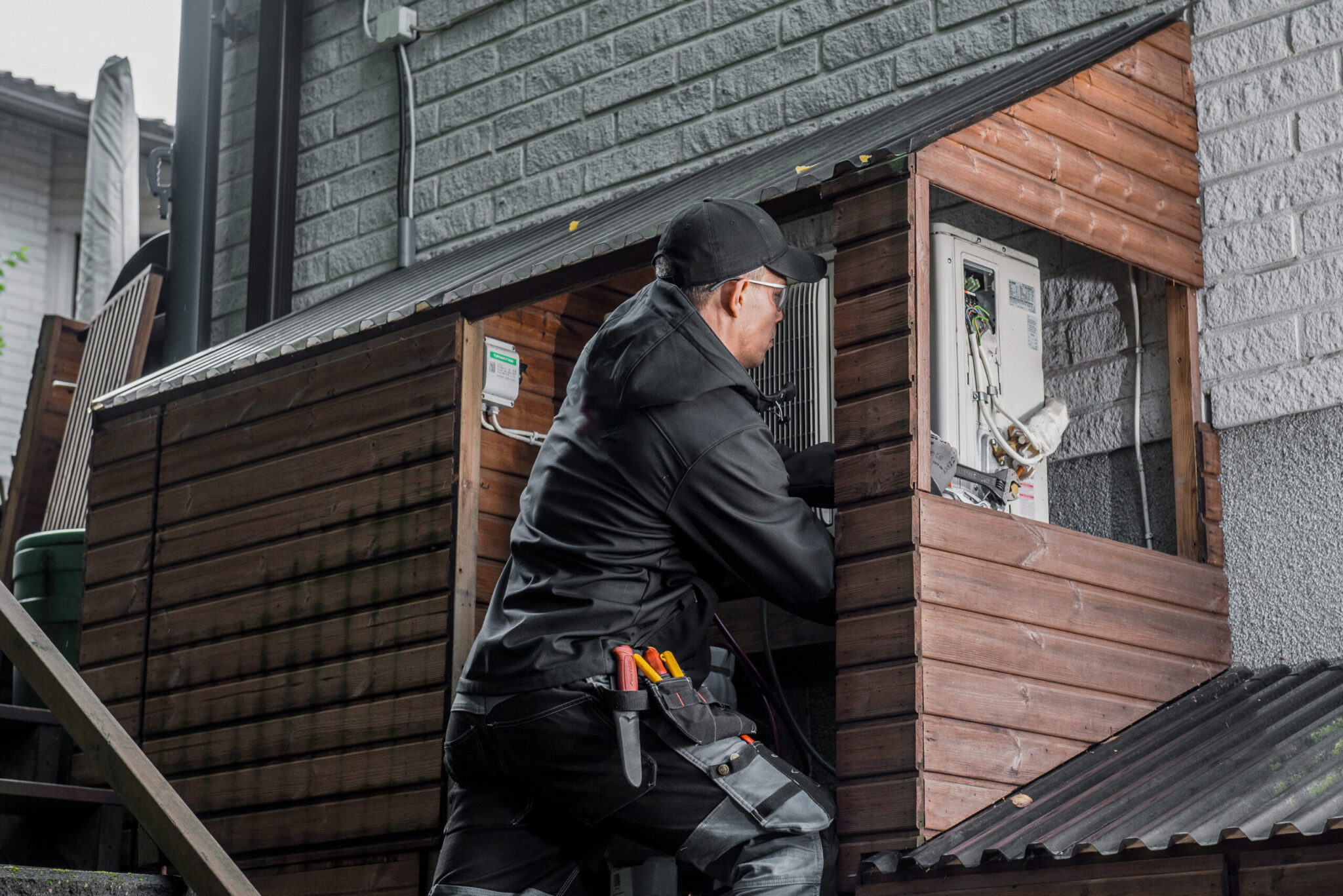
130 000 installed heat pumps.
Experience beyond compare.