
Air-to-air heat pumps are most efficient in mild weather, and their efficiency generally decreases as the outdoor temperature falls. Efficiency is often described using COP (Coefficient of Performance): a COP of 4 means around 4 kWh of heat for every 1 kWh of electricity used.
Modern heat pumps designed for Nordic conditions can still provide efficient heating at −10°C, −20°C and below, but both COP and heating capacity may decrease as it gets colder. Around freezing, humidity and defrost cycles can also affect efficiency.
When comparing heat pumps, remember that efficiency and heating capacity are not the same thing. COP tells you how efficiently the heat pump works, while heating capacity tells you how much heat it can actually produce. For Nordic conditions, it is therefore important to consider SCOP, cold-weather heating capacity and operating temperature together.
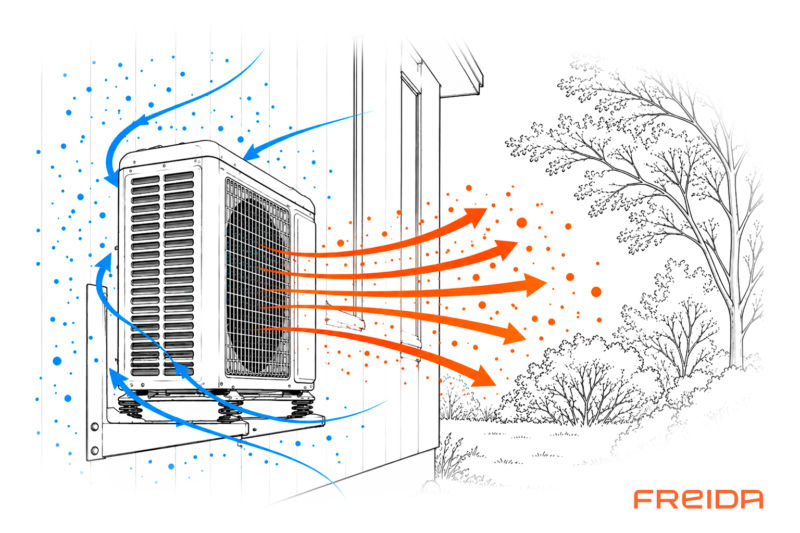
Air-to-air heat pumps can produce several times more heat energy than the electricity they use. But the amount changes with the weather.
A heat pump is usually more efficient when it is mild outside and less efficient when it gets very cold. That doesn’t mean it stops working when the temperature drops. Modern heat pumps designed for Nordic winters can still provide useful heat at very low temperatures.
But how much does the outdoor temperature actually matter? And is a heat pump still efficient at –10°C, –20°C or even –30°C?
Let’s take a closer look.
First, what do we mean by heat pump efficiency?
A heat pump uses electricity, but it doesn’t use that electricity simply to create heat.
Instead, it collects heat energy from the outdoor air and moves it into your home. This is why a heat pump can provide more heat energy than the electrical energy it consumes.
If you want to know more about how this works, take a look at our illustrated guide to how an air-to-air heat pump works.
We can describe this using something called COP, or Coefficient of Performance.
COP 2
1 kWh of electricity → 2 kWh of heat
COP 3
1 kWh of electricity → 3 kWh of heat
COP 5
1 kWh of electricity → 5 kWh of heat
So, the higher the COP, the more heat you are getting for the electricity used.
There is just one important detail: COP changes.
The same heat pump can have a COP of 5 in one situation and a COP of 2.5 in another. Outdoor temperature is one of the biggest reasons why.
How does temperature affect heat pump efficiency?
In simple terms: the colder it gets outside, the harder the heat pump has to work.
There is still heat energy in the outdoor air at –10°C, –20°C and even –30°C. In fact, thermal energy is present all the way down to absolute zero, at –273.15°C. A heat pump can collect some of this energy from the outdoor air and move it indoors.
But as the outdoor temperature falls, the difference between the cold outdoor side and the warm indoor side becomes greater. Moving heat across that bigger temperature difference requires more work from the heat pump.
As a result, COP usually falls as the outdoor temperature falls.
| Outdoor temperature | Indicative COP | Efficiency |
|---|---|---|
| +7°C, mild weather | 4–6 | Very good |
| 0°C, around freezing | 3–5 | Good |
| −10°C, below freezing | 2–4 | Good to moderate |
| −20°C, very cold | 1.5–3 | Can still be good, depending on the heat pump |
| −30°C, extreme cold | 1–2 | Significantly reduced |
These are only illustrative ranges. The actual COP depends on the heat pump, how much heat it is producing, humidity, defrosting and other operating conditions.
What happens around 0°C?
You might think that –20°C would always be more difficult for a heat pump than temperatures around freezing.
Temperature, however, isn’t the only thing that matters.
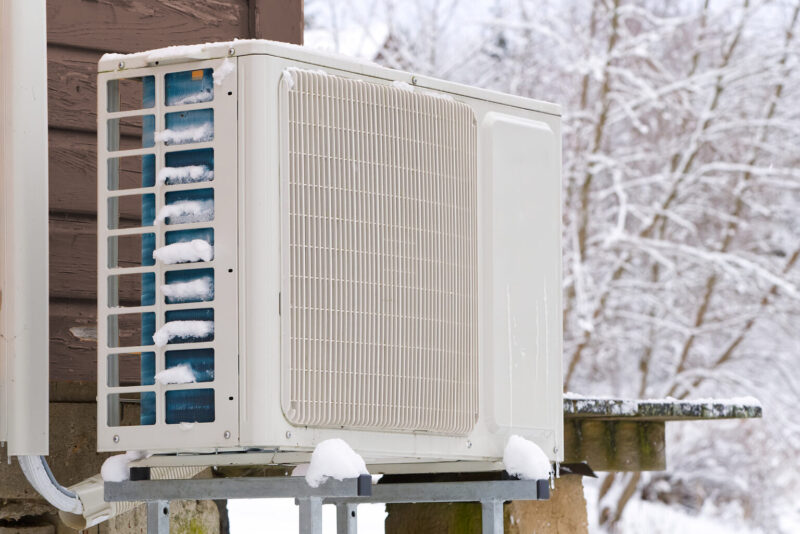
Around 0°C, the outdoor air can contain quite a lot of moisture. When this moist air passes through the cold outdoor heat exchanger, some of the moisture can freeze on its surface.
The heat pump then needs to remove this ice. This is called defrosting.
During a defrost cycle, the heat pump temporarily uses energy to melt the ice instead of heating your home. Once the ice is gone, normal heating continues. This is completely normal.
Is a heat pump still efficient at –10°C?
Yes, it can be.
At –10°C, a modern air-to-air heat pump designed for heating can still transfer considerably more heat into the home than the electricity it consumes.
Its COP will usually be lower than it is at +7°C, but that doesn’t mean the heat pump has become inefficient.
There is another thing happening at the same time, though. As it gets colder outside, your home also loses heat faster.
So while the heat pump becomes less efficient, your home needs more heating.
What changes in –20°C?
At –20°C, the differences between heat pumps become more important.
A heat pump designed for Nordic heating is able to still provide useful and efficient heat. Another model, usually a cheaper one may struggle at this point.
This is also where it becomes important to separate two different things: efficiency and heating capacity.
Efficiency
COP tells you how much heat you get compared with the electricity used.
Heating capacity
Heating capacity tells you how much heat the heat pump can actually produce, measured in kW.
For example, a heat pump could still have a COP of 2 at a very low temperature. That means it is producing twice as much heat energy as the electricity it consumes.
But if it can only produce 2 kW of heat while your home needs 6 kW, the rest of the heat still needs to come from somewhere else. This is why an air-to-air heat pump is never designed to be used as the primary source of heat.
So when it gets really cold, don’t ask only “How efficient is the heat pump?” Also ask “How much heat can it produce?”
Compare air-to-air heat pumps at −20°C
| Model | SCOP | Nominal heating capacity | Maximum heating capacity | Heating capacity at −20°C |
|---|---|---|---|---|
| Toshiba Daiseikai 10 25 | 5.50 | 3.2 kW | 6.7 kW | 4.5 kW |
| Daikin Siesta Perfera XTH 30 | 5.35 | 3.2 kW | 7.4 kW | 4.4 kW |
| Panasonic HZ25 | 5.30 | 3.2 kW | 7.5 kW | 4.2 kW |
| Mitsubishi Heavy Industries Kazan Arctic 20 | 5.20 | 2.7 kW | 7.6 kW | 4,3 kW |
| Midea Raynor Pro | 5.10 | 4.2 kW | 8.0 kW | 4,6 kW |
Need help choosing the right heat pump for cold weather?
Choosing a heat pump for Nordic winters means looking beyond SCOP alone. We can help you find a model that provides both good efficiency and enough heating capacity for your home.
Our group has over 20 years of experience with heat pumps and carries out more than 10,000 installations every year.
Need help choosing the right heat pump for cold weather?
Choosing a heat pump for Nordic winters means looking beyond SCOP alone. We can help you find a model that provides both good efficiency and enough heating capacity for your home.
Our group has over 20 years of experience with heat pumps and carries out more than 10,000 installations every year.

What happens at –25°C or –30°C?
Some air-to-air heat pumps designed for Nordic conditions are specified to operate at –30°C or even lower temperatures.
But there is an important detail here. If a heat pump can operate at –30°C, that doesn’t mean it produces the same amount of heat there as it does at –10°C. And it doesn’t mean its efficiency is the same.
The minimum operating temperature simply tells you how cold it can be outside while the heat pump is still specified to operate.
During particularly cold periods, the home’s other heating system may need to provide a larger share of the required heat.
The lowest operating temperature tells you where the heat pump can operate – not how well it performs there.

COP and SCOP are not the same thing
You will often see another number called SCOP when comparing heat pumps.
COP tells you about efficiency under specific conditions.
SCOP looks at efficiency over an entire standardised heating season. The “S” stands for seasonal.
For example, a SCOP of 5 means that in the standardised seasonal calculation, the heat output is five times the electricity input.
So while COP helps us understand why efficiency changes at different temperatures, SCOP gives us a broader picture of how efficiently a heat pump is expected to operate over a heating season.
Why does the house matter too?
Two identical heat pumps can have very different jobs.
Imagine one heat pump installed in a small, well-insulated home and another installed in a large, older house.
At –20°C, the heat pumps themselves may perform in much the same way. But the larger house will need considerably more heat to stay warm.
House A
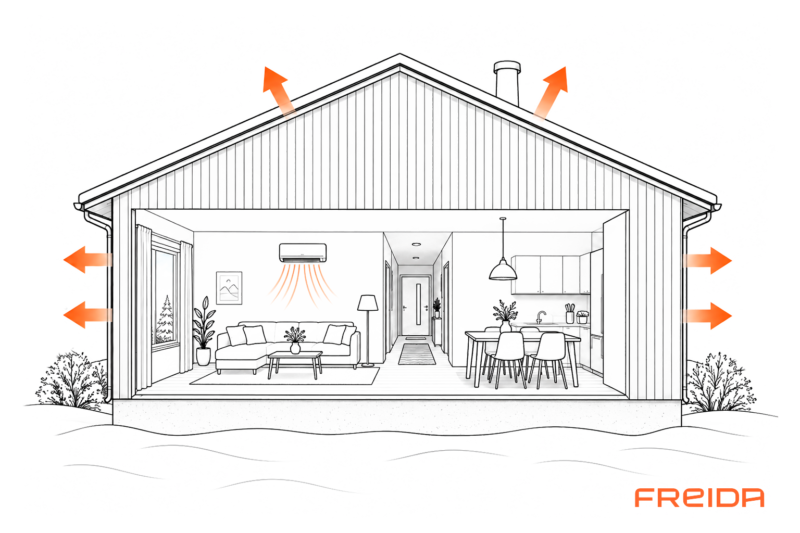
- 100 m²
- Modern, well-insulated house
- -20 °C
- 21 °C inside
House B
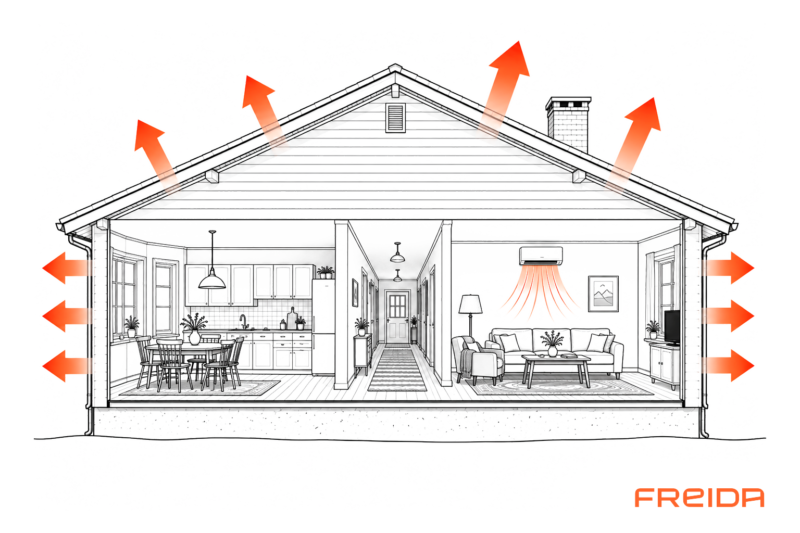
- 150 m²
- Older house with higher heat loss
- -20 °C
- 21 °C inside
Both homes are kept at the same indoor temperature, but House B requires considerably more heating. The heat pump therefore needs to work harder and use more electricity.
The size of the house, insulation, layout, indoor temperature, local climate and existing heating system all affect how much heating is needed.
This does not mean that House B should not invest in a good heat pump. In fact, because the house loses more heat, an efficient heat pump can make an even bigger difference to its energy consumption and heating costs.
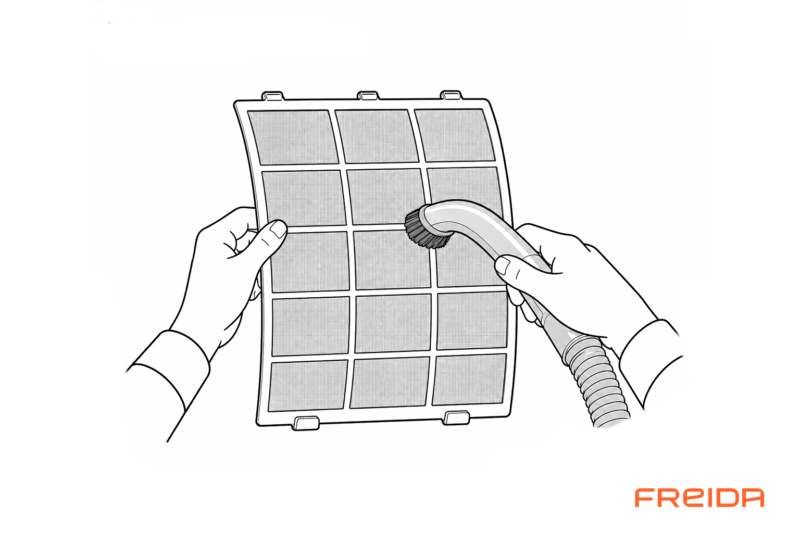
1. Clean the filters regularly
Dust collects in the indoor unit’s filters over time. This can restrict airflow and reduce the heat pump’s heating performance.
Check and clean the filters approximately every 2–4 weeks, depending on the conditions in your home and the manufacturer’s instructions.
Clean filters help maintain good airflow, heating performance and energy efficiency.
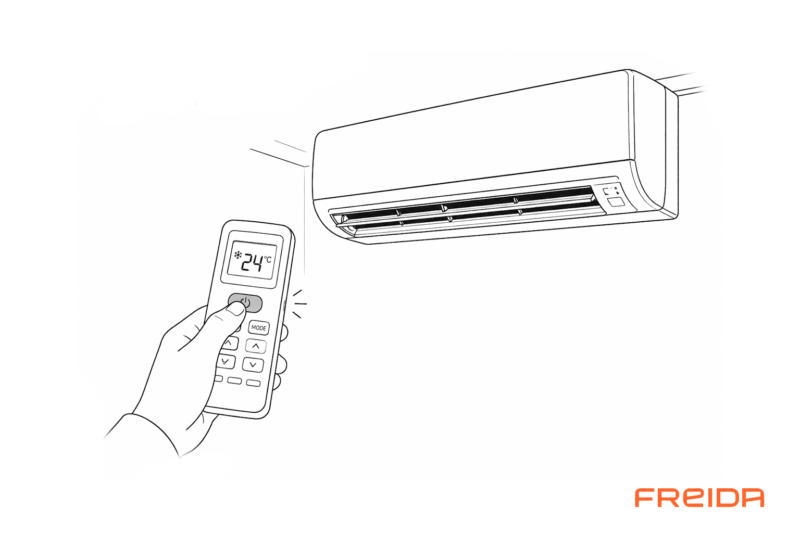
2. Keep the heat pump running steadily
During the heating season, an air-to-air heat pump generally works best when it is left running continuously in heating mode.
Avoid unnecessary switching on and off and large changes in the temperature setting. Keeping a steady temperature also helps maintain comfortable indoor conditions.
There can be exceptions, such as longer periods away from home or heating controls that are optimised according to electricity prices.
3. Make sure air can circulate freely
Make sure furniture or other objects do not block the indoor unit.
Use a sufficient fan speed and direct the warm air so that it can spread as widely as possible through the home.
Good airflow helps distribute the heat produced by the heat pump effectively to different parts of the home.

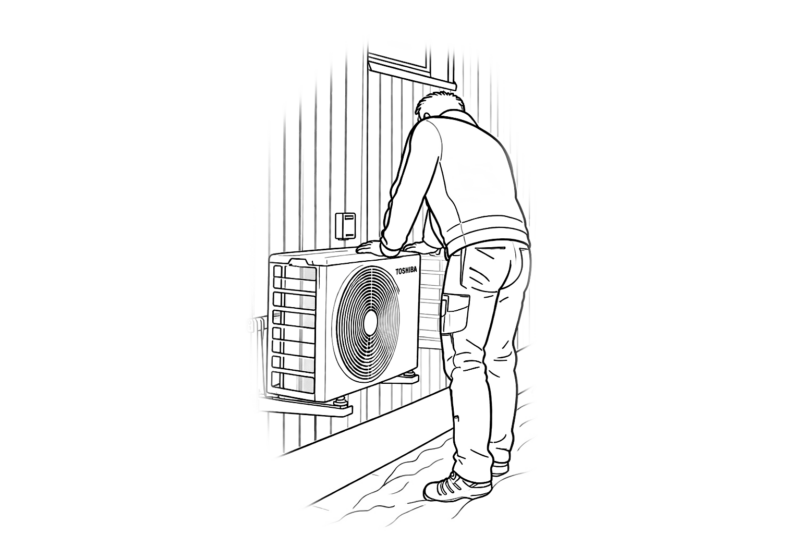
4. Keep the outdoor unit clear
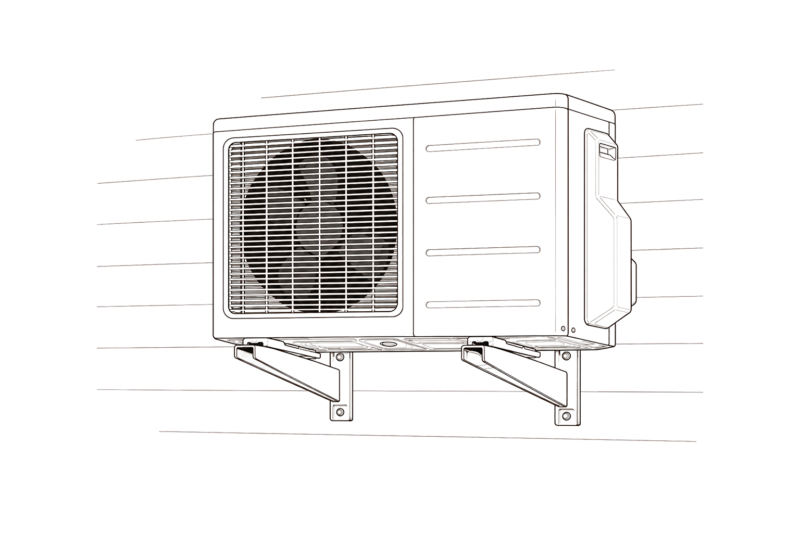
Keep the area around the outdoor unit clear and remove snow or other obstacles that could restrict airflow.
Also make sure that water from defrosting can drain away properly.
Do not try to remove ice from the heat exchanger with sharp tools or carry out maintenance that is not permitted for users by the manufacturer.
5. Have your heat pump professionally serviced
Even if you clean the filters regularly, dust and dirt can gradually build up inside the heat pump.
A more thorough professional cleaning service is generally worth having every 2–3 years, depending on use, conditions and the manufacturer’s recommendations.
Regular maintenance helps the heat pump maintain good heating performance and energy efficiency over time.
Want to know what you can maintain yourself? Read our guide to air-to-air heat pump maintenance and what should be left to a professional.



Find the right heat pump for your home
You don’t need to compare COP, SCOP and cold-weather performance yourself.
Tell us about your home and what you need from your heat pump – we’ll help you find suitable options for your home and climate.
Frequently asked questions
Generally, yes. As the outdoor temperature falls, an air-to-air heat pump usually needs more electricity in relation to the amount of heat it transfers indoors. Its COP therefore tends to decrease. How much it decreases depends on the heat pump and operating conditions.
Many air-to-air heat pumps designed for Nordic conditions can still provide useful and efficient heating at –20°C. However, both efficiency and available heating capacity vary between models.
There is no single COP value that is good in every situation because COP changes with operating conditions.
A COP of 3 means that the heat pump delivers three units of heat for every unit of electricity consumed under the specified conditions.
COP describes heating efficiency at specified operating conditions. SCOP describes calculated efficiency across a standardised heating season, taking varying temperatures and operating conditions into account.
Usually, no.
If your air-to-air heat pump is designed to operate at the outdoor temperature in question, there is normally no reason to turn it off just because it is cold.
Its efficiency may be lower than in mild weather, but it can still provide useful heat.
Your other heating system can then provide the rest when the heat pump alone cannot meet the full heating demand of the home.
For example, in a home with direct electric heating, the heat pump can continue doing part of the work while the electric radiators provide the additional heat that is needed.
No. The minimum operating temperature tells you that the unit is specified to operate at that temperature. It does not tell you its efficiency or how much heating capacity it can provide there.
Read more
Have you ever wondered how an air-to-air heat pump actually works?
We made a simple illustrated guide that explains the whole process step by step.
So, is an air-to-air heat pump efficient in cold weather?
Yes – but efficiency changes with temperature.
In mild weather an air-to-air heat pump can deliver several times the heat for each unit of electricity. As it gets colder, that ratio falls.
A model made for Nordic conditions still gives useful heat at –10°C, –20°C and below. In deep cold, actual heat output matters more than efficiency alone.
So choosing a heat pump for a Nordic home isn’t just about the highest SCOP or the lowest rated temperature.
Need a heat pump for Nordic conditions?
We will help you.

No cold corners.
No sudden heat.
That’s Nordic Comfort.